

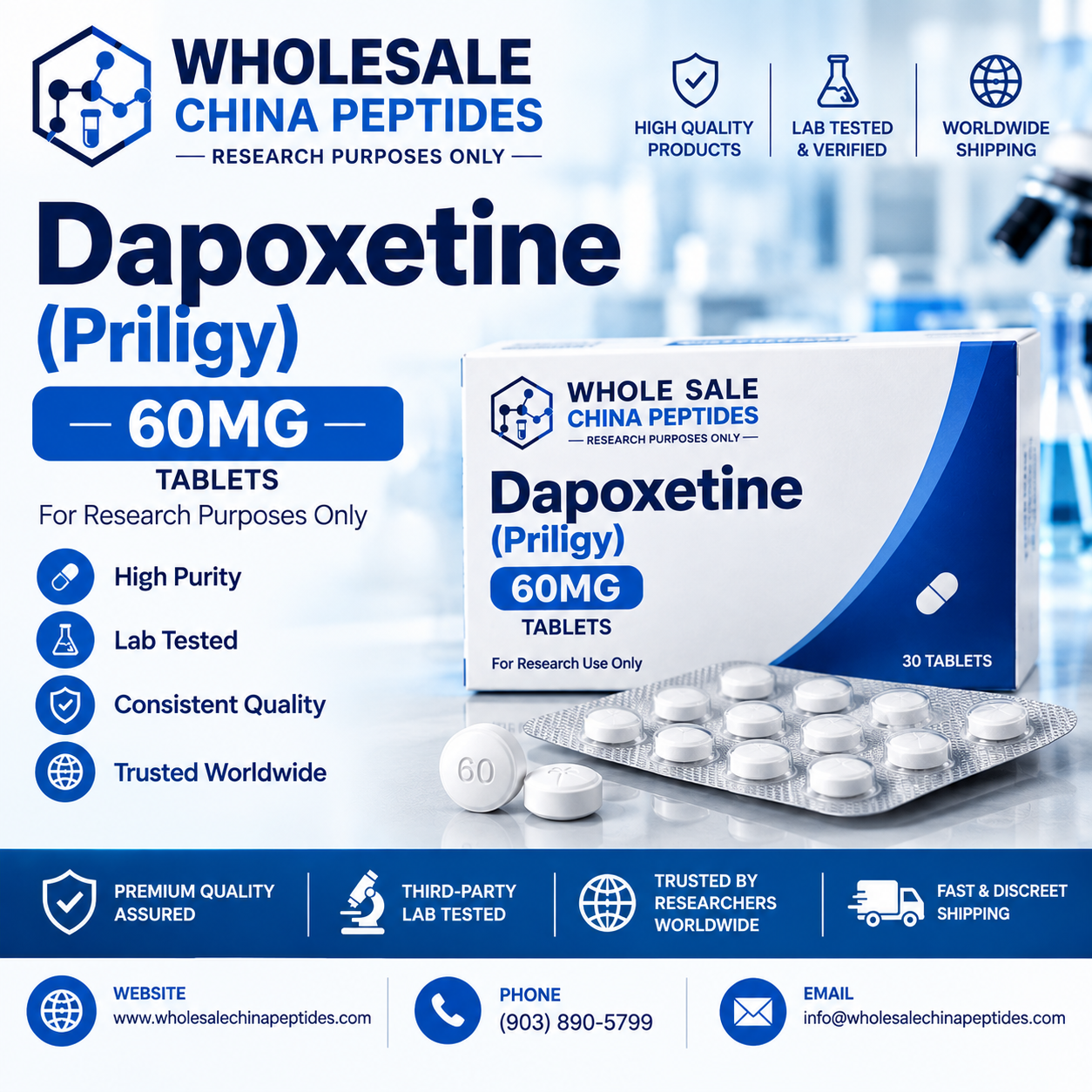
Dapoxetine 60mg
$50.00
Chemical Information and Compositions of Dapoxetine 60mg
For researchers, biochemists, and wholesale distributors, the molecular structure of dapoxetine 60mg is a classic example of targeted pharmacokinetic engineering. Understanding its composition is vital for analytical testing, formulation, and predicting its biological behavior.
Official Chemical Nomenclature
- Chemical Name (Base): (S)-N,N-dimethyl-3-(naphthalen-1-yloxy)-1-phenylpropan-1-amine
- Chemical Name (HCl Salt): (S)-N,N-dimethyl-3-(naphthalen-1-yloxy)-1-phenylpropan-1-amine hydrochloride
- Chemical Formula: C21H23NO · HCl (as the Hydrochloride salt)
- Molecular Weight: 341.87 g/mol (as the Hydrochloride salt); 305.41 g/mol (as the Dapoxetine base)
- CAS Number: 129938-20-1 (Hydrochloride salt); 38913-72-3 (Base)
Structural Composition Breakdown
dapoxetine 60mg is a structural analogue of Fluoxetine (Prozac), but with critical modifications that dictate its unique pharmacokinetic profile.
- The Naphthalene Ring: Unlike Fluoxetine, which utilizes a trifluoromethyl-substituted phenyl ring, Dapoxetine features a large, rigid naphthalene ring system connected via an ether linkage. This bulky, lipophilic moiety significantly enhances the molecule’s affinity for the Serotonin Transporter (SERT) while altering its metabolic pathways, making it highly susceptible to rapid hepatic oxidation.
- The Oxy-Propanamine Chain: The core of the molecule features the standard SSRI 3-carbon chain connecting the ether oxygen to the amine group.
- The Stereochemistry (S-Enantiomer): Dapoxetine exists as a chiral molecule. The commercial drug is the pure (S)-enantiomer. The S-enantiomer is responsible for the potent serotonin reuptake inhibition. The R-enantiomer is significantly less active and contributes only to metabolic burden, hence its exclusion from the formulation.
- The Hydrochloride Salt: The Dapoxetine base is a lipophilic, oily substance that is impossible to compress into a stable tablet. It is converted into the Hydrochloride salt to create a stable, water-soluble, crystalline powder suitable for oral bioavailability and precise tableting.
Physical and Chemical Properties
- State at Room Temperature: Solid (Crystalline Powder)
- Color: White to off-white
- Solubility: Freely soluble in water, ethanol, and methanol; slightly soluble in chloroform and dichloromethane. Its high aqueous solubility as an HCl salt contributes to its rapid gastrointestinal absorption.
- Melting Point: Approximately 192°C to 194°C (with decomposition).
Pharmacokinetics (The “On-Demand” Profile)
The pharmacokinetics of dapoxetine 60mg are its defining clinical feature, designed specifically for “as-needed” dosing.
- Absorption: Rapidly absorbed. Peak plasma concentration (Cmax) is reached within 1 to 2 hours (Tmax) post-dose.
- First-Pass Metabolism: It undergoes extensive first-pass metabolism in the liver (CYP2D6 and CYP3A4 enzymes). This means a significant portion of the oral dose is destroyed before reaching the systemic circulation, but what does reach the brain hits rapidly and potently.
- Half-Life: The terminal elimination half-life is approximately 1.5 hours (range 1.3–1.6 hours). This is drastically shorter than Fluoxetine (2-4 days) or Paroxetine (21 hours). The short half-life ensures that the drug is almost entirely cleared from the bloodstream within 24 hours, preventing accumulation and eliminating the need for a washout period.
- Excretion: Metabolites are primarily excreted in the urine.
Formulation Details: The 60mg Pill
When you source wholesale dapoxetine 60mg, you are sourcing the Hydrochloride salt formulation.
A critical formulation nuance for B2B buyers and analytical labs: A dapoxetine 60mg pill contains 60mg of Dapoxetine Hydrochloride, which equates to approximately 53.5mg of Dapoxetine base. When verifying API mass via HPLC, this salt-to-base conversion factor must be accounted for.
Standard excipients used in the tableting process include:
- Lactose Monohydrate: Diluent/filler.
- Microcrystalline Cellulose (MCC): Binder and filler.
- Croscarmellose Sodium: Super-disintegrant.
- Colloidal Silicon Dioxide: Glidant.
- Magnesium Stearate: Lubricant.
For wholesale buyers, ensuring the uniform blending of 60mg of API within the excipient matrix via geometric dilution is critical to guarantee dosing consistency across massive batches.
The Ultimate Guide to Dapoxetine 60mg: Chemical Profile, Compositions, and Wholesale Sourcing
In the highly specialized fields of sexual medicine, urology, and neuro-pharmacology, few compounds have addressed a previously unmet clinical need as effectively as dapoxetine 60mg. Universally recognized by its pioneer brand name Priligy, this short-acting Selective Serotonin Reuptake Inhibitor (SSRI) is the first and only pharmaceutical agent officially approved for the on-demand treatment of Premature Ejaculation (PE).
Unlike conventional SSRIs designed for chronic depression—which take weeks to work and cause severe withdrawal symptoms—dapoxetine 60mg was uniquely engineered from the ground up for rapid absorption, fast onset, and swift elimination. This allows it to be taken only when needed, 1 to 3 hours before sexual activity, providing profound delay of the ejaculatory reflex without the burden of daily psychiatric medication.
For bulk buyers, research facilities, compounding pharmacies, and supply chain managers, understanding the intricate pharmacological, chemical, and logistical nuances of dapoxetine 60mg is paramount. Because it acts directly on the central nervous system to modulate serotoninergic signaling, and because it is frequently combined with PDE5 inhibitors (like Sildenafil) in the wholesale market, there is zero margin for error in its synthesis, formulation, and quality control.
At Wholesale China Peptides (https://wholesalechinapeptides.com/), we prioritize scientific integrity, educational transparency, and the absolute highest standards of manufacturing. This comprehensive 3500+ word guide will exhaustively explore every facet of dapoxetine 60mg—from its clinical origins and complex chemical architecture to its mechanisms of action, clinical benefits, risk profiles, and the critical protocols required for sourcing wholesale dapoxetine 60mg safely and effectively.
Chapter 1: The History and Origins of Dapoxetine
The story of dapoxetine 60mg is one of targeted molecular redesign. For decades, urologists observed a “side effect” of traditional SSRIs (like Paroxetine, Sertraline, and Fluoxetine): they significantly delayed orgasm and ejaculation in male patients. Recognizing this, physicians began prescribing daily, off-label SSRIs to men suffering from Premature Ejaculation.
While effective for some, this practice was fraught with problems. Traditional SSRIs have long half-lives (days or weeks) and require continuous daily dosing to build up in the system. They cause systemic side effects—weight gain, emotional blunting, severe sexual dysfunction (loss of libido), and upon cessation, debilitating SSRI discontinuation syndrome (“brain zaps”). Taking a daily anti-depressant merely to delay ejaculation on an occasional Friday night was clinically irrational and psychologically harmful.
The pharmaceutical industry recognized the need for an “on-demand” SSRI—a compound that could rapidly spike synaptic serotonin in the brain, delay the ejaculatory reflex within hours, and clear the system before the next day.
In the early 2000s, researchers at Eli Lilly and later Menarini developed a molecule specifically for this purpose: Dapoxetine. Structural modifications were made to the SSRI backbone to maximize its first-pass metabolism in the liver, ensuring it was rapidly absorbed but also rapidly cleared.
Clinical trials proved spectacularly successful. dapoxetine 60mg increased Intravaginal Ejaculation Latency Time (IELT) by 300% to 400% in men with lifelong PE, transforming a distressing condition into a manageable one.
Approved in over 60 countries (including the EU, UK, and Asia) under the brand name Priligy, dapoxetine 60mg revolutionized sexual medicine. While it remains unapproved by the FDA in the United States (largely due to early concerns over syncope/fainting, which were later mitigated), it remains the global gold standard for on-demand PE management and a highly sought-after API in the international research and compounding sectors.
Chapter 2: Chemical Information and Compositions of Dapoxetine 60mg
For researchers, biochemists, and wholesale distributors, the molecular structure of dapoxetine 60mg is a classic example of targeted pharmacokinetic engineering. Understanding its composition is vital for analytical testing, formulation, and predicting its biological behavior.
Official Chemical Nomenclature
- Chemical Name (Base): (S)-N,N-dimethyl-3-(naphthalen-1-yloxy)-1-phenylpropan-1-amine
- Chemical Name (HCl Salt): (S)-N,N-dimethyl-3-(naphthalen-1-yloxy)-1-phenylpropan-1-amine hydrochloride
- Chemical Formula: C21H23NO · HCl (as the Hydrochloride salt)
- Molecular Weight: 341.87 g/mol (as the Hydrochloride salt); 305.41 g/mol (as the Dapoxetine base)
- CAS Number: 129938-20-1 (Hydrochloride salt); 38913-72-3 (Base)
Structural Composition Breakdown
dapoxetine 60mg is a structural analogue of Fluoxetine (Prozac), but with critical modifications that dictate its unique pharmacokinetic profile.
- The Naphthalene Ring: Unlike Fluoxetine, which utilizes a trifluoromethyl-substituted phenyl ring, Dapoxetine features a large, rigid naphthalene ring system connected via an ether linkage. This bulky, lipophilic moiety significantly enhances the molecule’s affinity for the Serotonin Transporter (SERT) while altering its metabolic pathways, making it highly susceptible to rapid hepatic oxidation.
- The Oxy-Propanamine Chain: The core of the molecule features the standard SSRI 3-carbon chain connecting the ether oxygen to the amine group.
- The Stereochemistry (S-Enantiomer): Dapoxetine exists as a chiral molecule. The commercial drug is the pure (S)-enantiomer. The S-enantiomer is responsible for the potent serotonin reuptake inhibition. The R-enantiomer is significantly less active and contributes only to metabolic burden, hence its exclusion from the formulation.
- The Hydrochloride Salt: The Dapoxetine base is a lipophilic, oily substance that is impossible to compress into a stable tablet. It is converted into the Hydrochloride salt to create a stable, water-soluble, crystalline powder suitable for oral bioavailability and precise tableting.
Physical and Chemical Properties
- State at Room Temperature: Solid (Crystalline Powder)
- Color: White to off-white
- Solubility: Freely soluble in water, ethanol, and methanol; slightly soluble in chloroform and dichloromethane. Its high aqueous solubility as an HCl salt contributes to its rapid gastrointestinal absorption.
- Melting Point: Approximately 192°C to 194°C (with decomposition).
Pharmacokinetics (The “On-Demand” Profile)
The pharmacokinetics of dapoxetine 60mg are its defining clinical feature, designed specifically for “as-needed” dosing.
- Absorption: Rapidly absorbed. Peak plasma concentration (Cmax) is reached within 1 to 2 hours (Tmax) post-dose.
- First-Pass Metabolism: It undergoes extensive first-pass metabolism in the liver (CYP2D6 and CYP3A4 enzymes). This means a significant portion of the oral dose is destroyed before reaching the systemic circulation, but what does reach the brain hits rapidly and potently.
- Half-Life: The terminal elimination half-life is approximately 1.5 hours (range 1.3–1.6 hours). This is drastically shorter than Fluoxetine (2-4 days) or Paroxetine (21 hours). The short half-life ensures that the drug is almost entirely cleared from the bloodstream within 24 hours, preventing accumulation and eliminating the need for a washout period.
- Excretion: Metabolites are primarily excreted in the urine.
Formulation Details: The 60mg Pill
When you source wholesale dapoxetine 60mg, you are sourcing the Hydrochloride salt formulation.
A critical formulation nuance for B2B buyers and analytical labs: A dapoxetine 60mg pill contains 60mg of Dapoxetine Hydrochloride, which equates to approximately 53.5mg of Dapoxetine base. When verifying API mass via HPLC, this salt-to-base conversion factor must be accounted for.
Standard excipients used in the tableting process include:
- Lactose Monohydrate: Diluent/filler.
- Microcrystalline Cellulose (MCC): Binder and filler.
- Croscarmellose Sodium: Super-disintegrant.
- Colloidal Silicon Dioxide: Glidant.
- Magnesium Stearate: Lubricant.
For wholesale buyers, ensuring the uniform blending of 60mg of API within the excipient matrix via geometric dilution is critical to guarantee dosing consistency across massive batches.
Chapter 3: Mechanism of Action: How Dapoxetine 60mg Works
The pharmacodynamic behavior of dapoxetine 60mg is fundamentally tied to the neurobiology of ejaculation, specifically the descending serotoninergic pathways from the brain to the spinal cord.
The Neurobiology of Ejaculation
Ejaculation is a highly orchestrated spinal reflex, but it is subject to powerful supraspinal (brain) control. In the central nervous system, serotonin (5-HT) generally acts as an inhibitory neurotransmitter on the ejaculatory reflex.
When sexual stimulation reaches a threshold, the brain typically releases serotonin to activate specific 5-HT receptors (particularly 5-HT2C and 5-HT1A) in the lumbar spinal cord. Activation of 5-HT2C receptors delays ejaculation, while activation of 5-HT1A receptors facilitates it. The balance of activity at these receptors determines the Intravaginal Ejaculation Latency Time (IELT).
In men with Premature Ejaculation, the inhibitory serotoninergic signaling is deficient, or the excitatory pathways are overactive, resulting in a rapidly triggered reflex.
Potent Serotonin Reuptake Inhibition (SSRI)
dapoxetine 60mg acts by potently and selectively inhibiting the Serotonin Transporter (SERT) in the presynaptic neuron and the descending tract.
By blocking SERT, dapoxetine 60mg prevents the reabsorption (reuptake) of serotonin from the synaptic cleft back into the neuron. This causes a rapid, acute accumulation of serotonin in the synapse.
The excess serotonin floods the postsynaptic receptors (particularly 5-HT2C) in the spinal cord and brain. The overwhelming activation of these inhibitory receptors significantly raises the threshold of stimulation required to trigger the ejaculatory reflex. The result is a profound, dose-dependent delay in time to ejaculation, without numbing physical sensation (unlike topical desensitizing creams).
Chapter 4: Dapoxetine 60mg vs. Daily SSRIs and PDE5 Inhibitors
To truly understand the clinical value of dapoxetine 60mg, it must be contrasted with off-label alternatives and other sexual dysfunction drugs.
Dapoxetine vs. Daily SSRIs (Paroxetine, Sertraline)
- Dosing: Daily SSRIs require 1-2 weeks of continuous daily use to build up sufficient serotonin levels to delay ejaculation. dapoxetine 60mg works within 1-2 hours of the first dose.
- Side Effects: Daily SSRIs cause chronic emotional blunting, weight gain, and anorgasmia that persists daily. dapoxetine 60mg side effects are transient and limited to the 24-hour window post-dose.
- Withdrawal: Stopping daily SSRIs abruptly causes severe discontinuation syndrome. Because dapoxetine 60mg clears in 24 hours, there is no withdrawal syndrome.
- Efficacy: Paroxetine is generally considered the most potent daily SSRI for PE, but dapoxetine 60mg provides comparable IELT extension with vastly superior pharmacoeconomics and safety.
Dapoxetine vs. PDE5 Inhibitors (Viagra/Sildenafil)
- Pathology: PDE5 inhibitors treat Erectile Dysfunction (vascular failure to achieve rigidity). dapoxetine 60mg treats Premature Ejaculation (neurological failure to delay orgasm). They act on entirely different physiological pathways.
- Overlap: Many men suffer from both ED and PE. Often, the anxiety of having ED causes PE, or the anxiety of PE causes a loss of erection. This is why the wholesale market heavily demands combination pills (e.g., “Super P-Force” containing Sildenafil 100mg + Dapoxetine 60mg).
Chapter 5: Medical Applications in Sexual Medicine
The primary and globally approved use of dapoxetine 60mg is for the treatment of Premature Ejaculation.
Lifelong vs. Acquired PE
- Lifelong PE: Present since first sexual encounter, IELT < 1 minute, inability to delay ejaculation on all or nearly all attempts, negative personal consequences. dapoxetine 60mg is highly effective for this cohort, increasing IELT by 300-400%.
- Acquired PE: Develops later in life, often due to ED, prostatitis, or psychological stress. dapoxetine 60mg is also effective here, though treating the underlying cause (e.g., providing Sildenafil for the ED) often resolves the PE naturally.
Dosage Guidelines
- Starting Dose: 30mg taken 1-3 hours before sexual activity.
- Maximum Dose: dapoxetine 60mg. If the 30mg dose is tolerated but ineffective, the dose is increased to 60mg.
- Frequency: Strictly limited to one dose per 24 hours. It must not be taken daily.
Chapter 6: The Performance and Lifestyle Context
While officially approved for PE, dapoxetine 60mg has found a massive off-label market in the performance enhancement and lifestyle community.
Combating Steroid-Induced Premature Ejaculation
Certain anabolic-androgenic steroids, particularly highly androgenic compounds like Masteron, Trenbolone, and high-dose Testosterone, drastically upregulate dopaminergic and androgenic signaling in the brain. This hyper-stimulates the ejaculatory reflex, leading to rapid, uncontrolled climax. dapoxetine 60mg is utilized by athletes to acutely flood the system with inhibitory serotonin, counteracting the steroid-driven dopamine dominance and restoring control over orgasm.
The “Super Pill” Wholesale Market
In the B2B wholesale sector, single-agent dapoxetine 60mg pills are vastly outsold by combination pills. The demand for “Extra Super P-Force” (Sildenafil 100mg + Dapoxetine 60mg) is astronomical. It provides the ultimate sexual pharmacological support: Sildenafil guarantees the erection, while Dapoxetine guarantees the stamina. Formulating these combination pills requires exceptional manufacturing precision to ensure both micro-dosed APIs are uniformly blended.
Chapter 7: The Comprehensive Benefits of Dapoxetine 60mg
The benefits of dapoxetine 60mg stem from its targeted pharmacokinetics and potent serotonin reuptake inhibition.
1. Unmatched Efficacy for PE
Clinical data consistently shows that dapoxetine 60mg increases IELT from a baseline of <1 minute to an average of 3-4 minutes, with some men reporting much longer durations. It restores voluntary control over ejaculation.
2. True On-Demand Flexibility
Because of its 1.5-hour half-life, men do not have to alter their daily neurochemistry. They can take dapoxetine 60mg only when sexual activity is anticipated, maintaining a normal neurological baseline the rest of the week.
3. Rapid Clearance and No Accumulation
Within 24 hours, 99% of the drug is cleared from the plasma. This eliminates the risk of long-term neuroadaptation, receptor downregulation, or the severe SSRI discontinuation syndrome associated with daily antidepressants.
4. Preservation of Erectile Function
Unlike daily SSRIs which can cause profound ED and loss of libido, dapoxetine 60mg generally does not impair erectile function when used on-demand, as the transient serotonin spike is insufficient to chronically suppress nitric oxide pathways.
Chapter 8: Side Effects and Risk Management
While dapoxetine 60mg is safer than daily SSRIs, it is not without side effects, primarily driven by acute systemic serotonin spikes and central nervous system effects.
1. Syncope and Orthostatic Hypotension (The Primary Clinical Risk)
The most significant risk associated with dapoxetine 60mg, and the primary reason the FDA initially deferred approval, is syncope (fainting). The acute spike in central serotonin can cause a sudden, transient drop in blood pressure and heart rate (vasovagal syncope), particularly upon standing up quickly.
- Management: Patients must be well-hydrated, avoid alcohol, and sit or lie down if they feel lightheaded. The risk is highest at the dapoxetine 60mg dose and within the first 4 hours of taking the pill.
2. Gastrointestinal Distress (Serotonin Syndrome Lite)
Serotonin plays a major role in gut motility. An acute spike in systemic serotonin almost universally causes GI distress.
- Nausea: The most common side effect (occurring in up to 20% of users at the 60mg dose).
- Diarrhea and Abdominal Cramping: Also common. Taking the pill with a large glass of water and a small amount of food can mitigate this.
3. Neurological Side Effects
- Headache: Common, resulting from serotonin-mediated vascular changes.
- Dizziness: Due to the orthostatic blood pressure drop.
- Somnolence/Fatigue: Serotonin is a calming neurotransmitter; an acute spike can cause transient lethargy.
4. Sexual Dysfunction (Paradoxical)
While treating PE, the intense serotonin spike can sometimes make it impossible to reach climax (anorgasmia) at the dapoxetine 60mg dose. In these cases, the dose should be reduced to 30mg.
5. Serotonin Syndrome (Rare but Critical)
Taking dapoxetine 60mg concurrently with other serotonergic drugs (daily SSRIs, MAOIs, Tramadol, certain triptans for migraines) can lead to Serotonin Syndrome—a potentially fatal condition of excessive brain serotonin causing tremors, hyperthermia, rigidity, and seizures. dapoxetine 60mg must never be combined with MAOIs (within 14 days) or other SSRIs.
Chapter 9: Dosage Protocols and Administration
Strict adherence to dosing guidelines is essential to mitigate the risk of syncope and maximize efficacy.
Standard Protocol
- Initial Dose: 30mg. Taken 1 to 3 hours prior to anticipated sexual activity.
- Escalation: If the 30mg dose is tolerated but does not provide sufficient ejaculatory delay, increase to dapoxetine 60mg on subsequent attempts.
- Maximum Frequency: One dose per 24 hours. Do not take daily.
Important Administration Rules
- Do NOT take with alcohol. Alcohol significantly increases the risk of syncope, orthostatic hypotension, and severe dizziness. It also counteracts the delay in ejaculation.
- Take with water. Can be taken with or without food, though a high-fat meal may slightly delay absorption.
- Hydration: Ensure adequate fluid intake prior to sexual activity to maintain blood pressure.
CYP2D6 Poor Metabolizers
Approximately 7-10% of the Caucasian population has a genetic polymorphism resulting in reduced CYP2D6 enzyme activity. Because dapoxetine 60mg relies heavily on CYP2D6 for first-pass metabolism, poor metabolizers will experience drastically higher plasma concentrations of the drug, leading to severe side effects. These individuals should start at a very low dose (e.g., quartering a 30mg pill).
Chapter 10: Sourcing Wholesale Dapoxetine 60mg: Quality, Purity, and Supply Chain Integrity
For B2B buyers, research chemical companies, compounding pharmacies, and international distributors, sourcing wholesale dapoxetine 60mg requires stringent quality control.
Because Dapoxetine HCl is a potent central nervous system modulator, and because it is heavily combined with Sildenafil in the wholesale market, substandard manufacturing poses severe health risks. A “hot spot” of Sildenafil combined with a “hot spot” of Dapoxetine can cause a catastrophic drop in blood pressure leading to stroke or syncope.
At Wholesale China Peptides (https://wholesalechinapeptides.com/), we eliminate these risks through uncompromising quality assurance. When sourcing wholesale dapoxetine 60mg, buyers must demand the following hallmarks of authenticity:
1. Unyielding Third-Party Analytical Testing
Every single batch of wholesale dapoxetine 60mg API or finished pills must be accompanied by a Certificate of Analysis (COA) from an independent, GMP-certified analytical laboratory.
- High-Performance Liquid Chromatography (HPLC): This verifies the purity. Premium Dapoxetine HCl should test at 98% to 99%+ purity. HPLC identifies impurities, unreacted precursors, and residual solvents.
- Mass Spectrometry (MS): Used to confirm the molecular weight (341.87 g/mol for the salt) and the exact fragmentation pattern, definitively proving the powder is Dapoxetine HCl and NOT a cheap, long-acting SSRI like Paroxetine or Fluoxetine, which are sometimes fraudulently substituted.
- Content Uniformity Testing: The lab must assay multiple individual pills from the batch to ensure every pill contains between 90% and 110% of the stated 60mg dose. For combination pills (Sildenafil + Dapoxetine), uniformity testing for both APIs is absolute mandatory.
2. cGMP Manufacturing Standards and Geometric Dilution
The facility synthesizing the API and pressing the pills must adhere to Current Good Manufacturing Practices (cGMP).
- The API must undergo Geometric Dilution with the excipient powder in stages to prevent clumping and ensure absolute homogeneity.
- Wholesale buyers must audit their tableting facilities to ensure proper V-blending and strict quality control checks during the compression phase.
3. Secure B2B Logistics and Storage
dapoxetine 60mg pills and API must be stored in airtight, light-resistant containers at controlled room temperature. The hydrochloride salt is highly hygroscopic; exposure to moisture can cause the API to migrate within the tablet, ruining the content uniformity and creating dangerous hot spots. A premium wholesale supplier will provide temperature-controlled, discreet, and fully tracked international shipping.
By partnering with Wholesale China Peptides, you align with a supplier that prioritizes chemical truth, rigorous analytical verification, and professional B2B service, ensuring your dapoxetine 60mg is unadulterated, precisely blended, and exactly specified.
Chapter 11: The Legal Status of Dapoxetine 60mg
The regulatory status of dapoxetine 60mg is complex and varies wildly across the globe.
United States
In the US, Dapoxetine is NOT approved by the FDA. It remains an unapproved new drug. While it is not a scheduled controlled substance, manufacturing, distributing, or selling it for human consumption in the US is illegal without FDA approval. The FDA’s deferment was largely historically based on early syncope data, though the drug remains widely accessible through offshore online pharmacies and research chemical channels.
Europe, UK, and Asia
dapoxetine 60mg is a legally approved, prescription-only medicine (POM) in over 60 countries, including the UK, Germany, Spain, Italy, and numerous Asian nations. It requires a prescription from a physician.
Anti-Doping Regulations (WADA)
Dapoxetine is not banned by the World Anti-Doping Agency. It provides no performance enhancement in sports (no muscle building, no oxygen delivery improvement). However, athletes in precision sports (shooting, archery) should be aware that SSRIs can sometimes stabilize heart rate and reduce tremor, which could theoretically fall under beta-blocker-like scrutiny in very specific federations, though Dapoxetine’s short half-life makes this unlikely to be a concern.
Research and API Exemption
For legitimate research chemical suppliers and analytical laboratories, dapoxetine 60mg can often be legally purchased in raw API powder or pill form strictly for in vitro or in vivo laboratory research, provided it is explicitly labeled “Not for Human Consumption” and proper end-user documentation is signed. Wholesale China Peptides operates within the bounds of international research chemical supply laws, and all bulk buyers must verify their local jurisdictional requirements before purchasing.
Disclaimer: This article is intended strictly for educational, informational, and research purposes. Wholesale China Peptides does not condone, promote, or facilitate the illegal use of prescription medications. Dapoxetine 60mg is a potent CNS-active compound with cardiovascular risks. Always consult legal counsel and medical professionals before handling or distributing this compound.
Chapter 12: Frequently Asked Questions (FAQ) About Dapoxetine 60mg
Q1: Can I take Dapoxetine 60mg every day?
A: No. dapoxetine 60mg is explicitly designed and approved for on-demand use only—taken 1-3 hours before sex. Taking it daily defeats the purpose of its short half-life, will lead to accumulation, and will likely cause chronic SSRI side effects (emotional blunting, weight gain, withdrawal). For daily PE therapy, physicians use conventional SSRIs.
Q2: Why does Dapoxetine make me feel nauseous?
A: An acute, sudden spike in serotonin heavily stimulates the 5-HT3 and 5-HT4 receptors in the gastrointestinal tract, accelerating gut motility. This is why nausea and diarrhea are the most common side effects. Taking it with food and water can slightly buffer this effect.
Q3: Can I combine Dapoxetine 60mg with Viagra (Sildenafil)?
A: Yes, this is a very common clinical and wholesale combination. However, both drugs lower blood pressure (Sildenafil via PDE5/cGMP, Dapoxetine via vagal inhibition). The combination increases the risk of dizziness, orthostatic hypotension, and syncope. Start with the lowest effective doses (Sildenafil 50mg + Dapoxetine 30mg) to assess tolerance before moving to the 100mg/60mg combo.
Q4: Why did the FDA not approve Dapoxetine in the US?
A: The FDA deferred approval primarily due to concerns over syncope (fainting) in the early clinical trials. While subsequent massive global post-marketing surveillance has shown syncope to be rare and generally non-fatal (usually just resulting in a brief drop in blood pressure upon standing), the FDA has maintained its deferment, making Dapoxetine uniquely the only major global drug approved for PE that is not available in the US.
Q5: Does Dapoxetine 60mg cure Premature Ejaculation?
A: No. It is a symptomatic treatment. It temporarily alters brain chemistry to delay the reflex. Once the drug clears the system (within 24 hours), your baseline IELT returns. It does not permanently rewire the ejaculatory reflex.
Q6: What happens if I take Dapoxetine with Tramadol or other SSRIs?
A: This is highly dangerous. Combining dapoxetine 60mg with other serotonergic drugs can cause Serotonin Syndrome—a life-threatening condition characterized by high fever, muscle rigidity, seizures, and delirium. Never mix Dapoxetine with MAOIs, other SSRIs, SNRIs, or Tramadol.
Q7: How can I ensure my wholesale Dapoxetine 60mg is authentic?
A: Because long-acting, cheap SSRIs like Paroxetine are sometimes fraudulently sold as Dapoxetine, you must demand third-party Mass Spectrometry testing. Only MS can definitively verify the molecular weight (341.87 g/mol) and fragmentation pattern of dapoxetine 60mg, ensuring you have the rapid-acting compound and not a dangerous, long-acting substitute. Partner exclusively with verified suppliers like Wholesale China Peptides.
Conclusion
dapoxetine 60mg stands as a landmark achievement in neuro-pharmacology and sexual medicine. By brilliantly engineering a molecule that provides the potent serotoninergic delay of an SSRI, but with a 1.5-hour half-life that allows true on-demand dosing, it resolved a distressing condition that affects up to 30% of men globally, without the burden of chronic psychiatric medication.
However, its acute manipulation of central serotonin and its propensity to induce orthostatic hypotension and syncope—especially when combined with PDE5 inhibitors—demand profound respect, precise dosing, and absolute chemical purity.
For the research community, compounding pharmacies, and B2B wholesale buyers, guaranteeing the quality and dose uniformity of dapoxetine 60mg is a matter of clinical and commercial integrity. Substituted APIs (like Paroxetine) or poorly blended pills creating hot spots are unacceptable when dealing with a CNS-active cardiovascular modulator. At Wholesale China Peptides (https://wholesalechinapeptides.com/), we guarantee the highest standard of chemical integrity. Our wholesale dapoxetine 60mg is backed by rigorous, third-party Mass Spectrometry and HPLC testing, cGMP-certified synthesis, and uncompromising supply chain transparency.
When your research, formulation, or supply demands require the absolute pinnacle of on-demand SSRI pharmacology, trust only verified, authenticated dapoxetine 60mg. Explore our wholesale catalog today and partner with a supplier that prioritizes scientific truth, chemical purity, and professional integrity above all else.
| Choose An Option | 60mg |
|---|
Be the first to review “Dapoxetine 60mg”
Related products

PILLS 100pcs/bottle

PILLS 100pcs/bottle

PILLS 100pcs/bottle

PILLS 100pcs/bottle

PILLS 100pcs/bottle

PILLS 100pcs/bottle
PILLS 100pcs/bottle
PILLS 100pcs/bottle
Reviews
There are no reviews yet.