
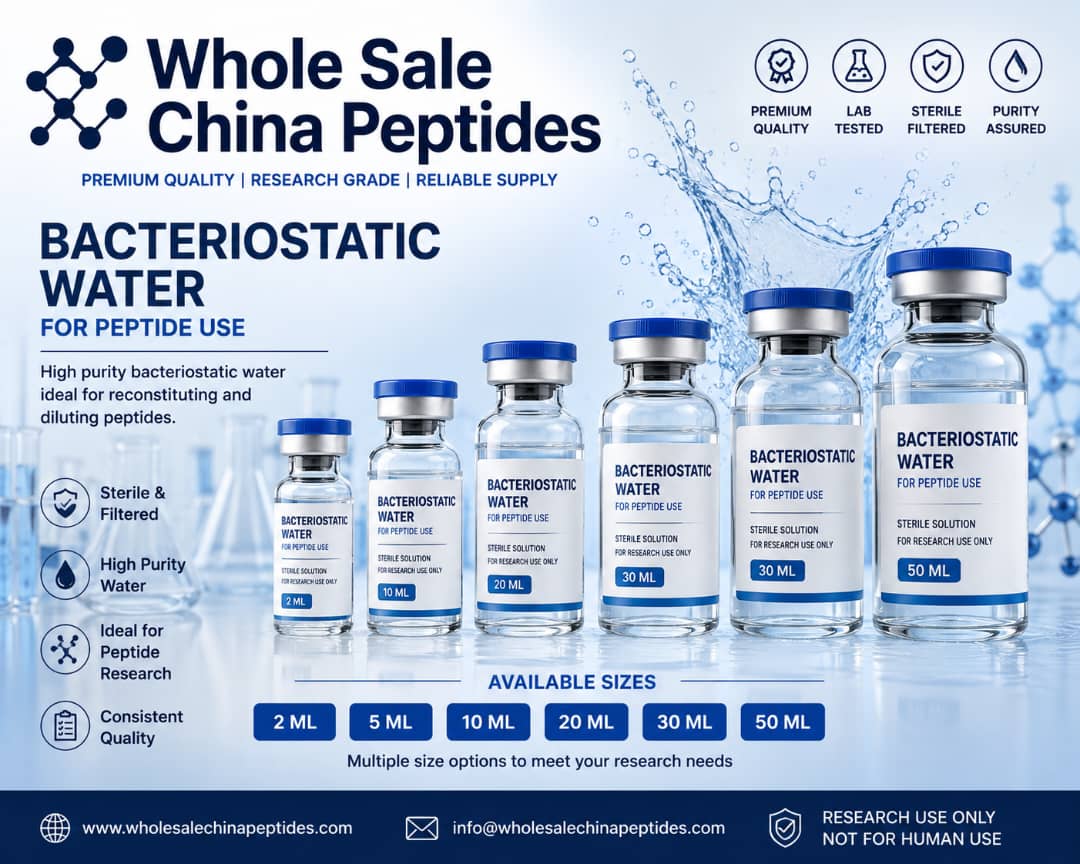
Bacteriostatic Water
Price range: $11.00 through $100.00
Bacteriostatic Water Composition & Chemical Information
Composition:
| Component | Concentration | Purpose |
|---|---|---|
| Water for Injection (WFI) | 99.1% | Solvent |
| Benzyl Alcohol | 0.9% | Preservative (bacteriostatic agent) |
| Hydrochloric Acid/Sodium Hydroxide | Trace amounts | pH adjustment (5.7-7.0) |
Chemical Properties of Benzyl Alcohol:
- Molecular Formula: C₇H₈O
- Molecular Weight: 108.14 g/mol
- Solubility: Highly soluble in water
- Mechanism of Action: Disrupts bacterial cell membranes and inhibits bacterial growth
Chemical Properties of Bacteriostatic Water:
| Property | Details |
|---|---|
| Appearance | Clear, colorless liquid |
| pH | 5.7-7.0 |
| Osmolality | ~0 mOsm/kg (isotonic) |
| Sterility | Sterile (free from viable microorganisms) |
| Pyrogenicity | Non-pyrogenic (free from endotoxins) |
| Shelf Life (Unopened) | 2-3 years (depending on storage conditions) |
| Shelf Life (Opened) | Up to 28 days (when stored properly) |
Where to Buy High-Quality Bacteriostatic Water for Research
For researchers seeking pharmaceutical-grade bacteriostatic water, Wholesale China Peptides offers:
✅ USP-grade bacteriostatic water (meets United States Pharmacopeia standards)
✅ Sterile and non-pyrogenic (free from bacteria and endotoxins)
✅ Multiple vial sizes (10 mL, 30 mL, 100 mL)
✅ Secure, discreet shipping worldwide
✅ Bulk pricing for institutions and laboratories
Note: Bacteriostatic water is for research use only—not for human consumption or medical use without proper regulatory approval.
Bacteriostatic Water: A Comprehensive Guide for Peptide Research & Laboratory Applications
Introduction to Bacteriostatic Water
Bacteriostatic water is a critical component in peptide research and laboratory applications, serving as the preferred solvent for reconstituting lyophilized peptides. Unlike regular sterile water, bacteriostatic water contains a preservative agent (0.9% benzyl alcohol) that inhibits bacterial growth, making it ideal for multiple-use vials and long-term peptide storage.
At Wholesale China Peptides, we provide high-quality bacteriostatic water specifically formulated for peptide research. This 1000+ word guide covers everything researchers need to know about bacteriostatic water, including its composition, uses, reconstitution techniques, storage guidelines, and safety considerations.
What Is Bacteriostatic Water?
Bacteriostatic water is a sterile, non-pyrogenic water solution that contains 0.9% benzyl alcohol as a preservative. This preservative agent prevents the growth of bacteria and other microorganisms, allowing the water to be used multiple times without contamination.
Key Features of Bacteriostatic Water:
✅ Sterile and non-pyrogenic – Free from bacteria, endotoxins, and other contaminants
✅ Contains 0.9% benzyl alcohol – Inhibits bacterial growth for multiple uses
✅ pH-balanced (5.7-7.0) – Compatible with most peptides and proteins
✅ Multiple-use vial – Can be used for up to 28 days after initial use
✅ Wide range of applications – Reconstituting peptides, diluting medications, and laboratory use
Bacteriostatic Water Composition & Chemical Information
Composition:
| Component | Concentration | Purpose |
|---|---|---|
| Water for Injection (WFI) | 99.1% | Solvent |
| Benzyl Alcohol | 0.9% | Preservative (bacteriostatic agent) |
| Hydrochloric Acid/Sodium Hydroxide | Trace amounts | pH adjustment (5.7-7.0) |
Chemical Properties of Benzyl Alcohol:
- Molecular Formula: C₇H₈O
- Molecular Weight: 108.14 g/mol
- Solubility: Highly soluble in water
- Mechanism of Action: Disrupts bacterial cell membranes and inhibits bacterial growth
Chemical Properties of Bacteriostatic Water:
| Property | Details |
|---|---|
| Appearance | Clear, colorless liquid |
| pH | 5.7-7.0 |
| Osmolality | ~0 mOsm/kg (isotonic) |
| Sterility | Sterile (free from viable microorganisms) |
| Pyrogenicity | Non-pyrogenic (free from endotoxins) |
| Shelf Life (Unopened) | 2-3 years (depending on storage conditions) |
| Shelf Life (Opened) | Up to 28 days (when stored properly) |
Why Use Bacteriostatic Water for Peptide Research?
1. Prevents Bacterial Contamination
- Benzyl alcohol inhibits the growth of bacteria and fungi, preventing contamination of reconstituted peptides.
- Multiple-use capability allows for repeated withdrawals from the same vial without risk of infection.
2. Extends Peptide Stability
- Preserves peptide integrity by preventing microbial degradation.
- Maintains potency of reconstituted peptides for up to 28 days when stored properly.
3. pH-Compatible with Peptides
- pH range (5.7-7.0) is compatible with most peptides, preventing denaturation or precipitation.
- Isotonic solution minimizes osmotic stress on peptides.
4. Cost-Effective & Convenient
- Multiple-use vial reduces waste and cost compared to single-use sterile water.
- Easy to use for reconstituting and diluting peptides in research settings.
Bacteriostatic Water vs. Sterile Water: Key Differences
| Feature | Bacteriostatic Water | Sterile Water |
|---|---|---|
| Preservative | Contains 0.9% benzyl alcohol | No preservative |
| Shelf Life (Opened) | Up to 28 days | Must be used immediately (single-use) |
| Multiple Uses | Yes (can be used multiple times) | No (single-use only) |
| Bacterial Growth Inhibition | Yes (prevents bacterial growth) | No (prone to contamination) |
| pH Range | 5.7-7.0 | 5.0-7.0 |
| Cost | Higher (due to preservative) | Lower |
| Applications | Peptide reconstitution, multiple-use injections | Single-use injections, laboratory procedures |
How to Use Bacteriostatic Water for Peptide Reconstitution
Step-by-Step Reconstitution Guide
1. Gather Supplies
- Bacteriostatic water vial
- Lyophilized peptide vial
- Sterile syringe (1-3 mL)
- Alcohol swabs
- Sterile needle (22-25 gauge)
2. Prepare the Work Area
- Clean and disinfect the work surface.
- Wash hands thoroughly with soap and water.
- Use gloves to maintain sterility.
3. Reconstitute the Peptide
- Swab the tops of both the bacteriostatic water vial and the peptide vial with an alcohol swab.
- Draw the appropriate volume of bacteriostatic water into the syringe** (see dosage calculations below).
- Inject the bacteriostatic water into the peptide vial at a 45-degree angle, aiming for the side of the vial to avoid damaging the peptide.
- Gently swirl or roll the vial to dissolve the peptide (do not shake vigorously).
- Inspect the solution – It should be clear and free of particles.
4. Dosage Calculations
To determine the volume of bacteriostatic water needed for reconstitution:
- Check the peptide vial label for the total peptide amount (e.g., 5 mg).
- Determine the desired concentration (e.g., 1 mg/mL).
- Calculate the volume of bacteriostatic water to add:
- Volume (mL) = Total Peptide Amount (mg) / Desired Concentration (mg/mL)
- Example: For a 5 mg peptide vial at 1 mg/mL, add 5 mL of bacteriostatic water.
5. Storage Guidelines
- Store reconstituted peptides in the refrigerator (2-8°C).
- Use within 28 days (or as specified by the peptide manufacturer).
- Avoid freezing unless recommended by the manufacturer.
Bacteriostatic Water Applications in Research
1. Peptide Reconstitution
- Lyophilized peptides require reconstitution with bacteriostatic water for proper dissolution and stability.
- Essential for research peptides such as GHRP-6, Ipamorelin, BPC-157, and others.
2. Laboratory & Cell Culture
- Diluting reagents for cell culture and molecular biology experiments.
- Preparing buffers and solutions for biochemical assays.
3. Pharmaceutical & Drug Development
- Reconstituting lyophilized drugs for preclinical and clinical research.
- Diluting medications for animal studies and in vitro experiments.
4. Veterinary Research
- Reconstituting veterinary peptides for animal studies.
- Diluting vaccines and medications for veterinary use.
5. Cosmetic & Dermatological Research
- Reconstituting cosmetic peptides for topical and injectable formulations.
- Preparing solutions for skin and hair research.
Safety Considerations & Potential Side Effects
While bacteriostatic water is generally safe for research use, there are important safety considerations to keep in mind:
1. Benzyl Alcohol Sensitivity
- Benzyl alcohol can cause allergic reactions in some individuals.
- Symptoms may include redness, itching, or swelling at the injection site.
- Use sterile water instead for individuals with benzyl alcohol sensitivity.
2. Not for Intravenous Use
- Bacteriostatic water is not intended for intravenous (IV) use unless specifically indicated.
- Use sterile water for injection (SWFI) for IV administration.
3. Not for Neonatal Use
- Benzyl alcohol can be toxic to neonates (newborns).
- Use preservative-free sterile water for neonatal applications.
4. Proper Storage & Handling
- Store unopened vials at room temperature (15-30°C).
- Store opened vials in the refrigerator (2-8°C).
- Discard after 28 days or if contamination is suspected.
5. Sterility Maintenance
- Always use aseptic technique when handling bacteriostatic water.
- Do not touch the needle or vial septum to prevent contamination.
- Use a new, sterile needle and syringe for each withdrawal.
Where to Buy High-Quality Bacteriostatic Water for Research
For researchers seeking pharmaceutical-grade bacteriostatic water, Wholesale China Peptides offers:
✅ USP-grade bacteriostatic water (meets United States Pharmacopeia standards)
✅ Sterile and non-pyrogenic (free from bacteria and endotoxins)
✅ Multiple vial sizes (10 mL, 30 mL, 100 mL)
✅ Secure, discreet shipping worldwide
✅ Bulk pricing for institutions and laboratories
Note: Bacteriostatic water is for research use only—not for human consumption or medical use without proper regulatory approval.
Frequently Asked Questions (FAQs) About Bacteriostatic Water
1. Can I use sterile water instead of bacteriostatic water for peptides?
- Sterile water can be used, but it must be used immediately (single-use only).
- Bacteriostatic water is preferred for multiple uses and long-term storage.
2. How long can I store reconstituted peptides with bacteriostatic water?
- Reconstituted peptides can be stored for up to 28 days in the refrigerator (2-8°C).
- Check the peptide manufacturer’s guidelines for specific storage recommendations.
3. Can I freeze bacteriostatic water or reconstituted peptides?
- Bacteriostatic water should not be frozen, as it may affect the preservative’s efficacy.
- Some peptides may be frozen, but check the manufacturer’s guidelines before freezing.
4. Is bacteriostatic water safe for injections?
- Bacteriostatic water is safe for subcutaneous (SC) and intramuscular (IM) injections when used properly.
- Do not use for intravenous (IV) injections unless specifically indicated.
5. What is the difference between bacteriostatic water and sterile saline?
- Bacteriostatic water contains 0.9% benzyl alcohol as a preservative.
- Sterile saline contains 0.9% sodium chloride (NaCl) and no preservative.
- Use bacteriostatic water for peptide reconstitution and sterile saline for wound cleaning or IV use.
6. Can I use bacteriostatic water for cell culture?
- Bacteriostatic water is not recommended for cell culture, as benzyl alcohol can be toxic to cells.
- Use sterile, preservative-free water for cell culture applications.
7. How do I know if my bacteriostatic water is contaminated?
- Check for cloudiness, particles, or discoloration in the solution.
- Discard the vial immediately if contamination is suspected.
Conclusion: Why Bacteriostatic Water is Essential for Peptide Research
Bacteriostatic water is a critical tool for peptide research and laboratory applications, offering sterility, stability, and convenience for reconstituting and storing peptides. Its ability to inhibit bacterial growth makes it ideal for multiple-use vials, while its pH-balanced and isotonic properties ensure peptide integrity and compatibility.
For researchers looking to advance their peptide studies, Wholesale China Peptides provides high-quality bacteriostatic water that meets USP standards for sterility and safety.
Disclaimer: This article is for educational and research purposes only. Bacteriostatic water is not approved for human use outside of specific medical applications and should only be used in IRB-approved laboratory settings.
Ready to Buy High-Quality Bacteriostatic Water for Your Research?
🔹 Visit Wholesale China Peptides
🔹 Choose from multiple vial sizes (10 mL, 30 mL, 100 mL)
🔹 Ensure sterility and safety with USP-grade bacteriostatic water
| Choose An Option | 10ml*10vials, 30ml*10vials, 100ml*10vials |
|---|
Be the first to review “Bacteriostatic Water”
Related products

Cognitive & Neurological Research Peptides

Growth Hormone Secretagogues

Growth Hormone Secretagogues

GLP-1 & Metabolic Research Peptides

Healing & Recovery Peptides

Healing & Recovery Peptides

Healing & Recovery Peptides
Healing & Recovery Peptides
Reviews
There are no reviews yet.