
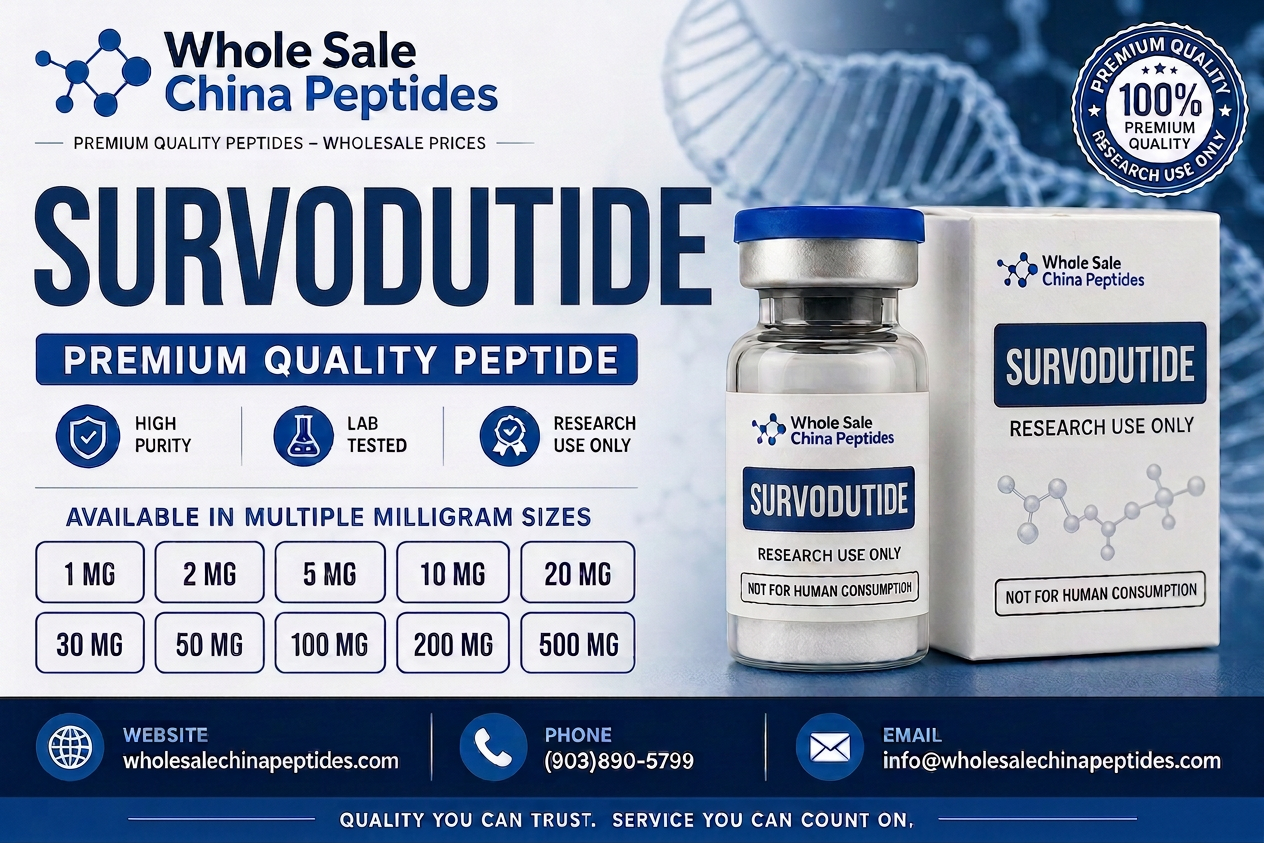
Survodutide Peptide
Price range: $300.00 through $525.00
Survodutide Peptide: Chemical Composition & Structure
Molecular Formula:
C₂₁₅H₃₃₀N₅₆O₆₅S₃ (approximate, as exact sequence is proprietary)
Molecular Weight:
~4800-5000 Da (varies based on specific modifications)
Key Structural Features:
- Modified peptide backbone – Incorporates non-natural amino acids for enhanced stability
- GLP-1/glucagon hybrid sequence – Combines key regions of both GLP-1 and glucagon
- Fatty acid conjugation – Extends half-life through albumin binding
- Dual receptor binding domains – Optimized for high-affinity binding to GLP-1R and GCGR
- PEGylation or other modifications – Improves pharmacokinetic properties
Chemical Properties:
| Property | Details |
|---|---|
| Solubility | Water-soluble (reconstitute with bacteriostatic water) |
| Storage (Lyophilized) | -20°C (stable for 2+ years) |
| Storage (Reconstituted) | 2-8°C (stable for 7-14 days) |
| Half-Life | ~5-7 days (due to fatty acid conjugation) |
| Purity | ≥98% (HPLC-verified) |
Survodutide Peptide: A Comprehensive Research Guide to GLP-1/Glucagon Dual Agonism
Introduction to Survodutide Peptide
Survodutide (also known as BI 456906) is a novel dual glucagon-like peptide-1 (GLP-1) and glucagon receptor agonist developed as a next-generation therapeutic for obesity, type 2 diabetes, and metabolic disorders. This synthetic peptide represents a breakthrough in metabolic research, combining the appetite-suppressing effects of GLP-1 with the fat-burning and energy-boosting properties of glucagon to deliver superior weight loss and metabolic benefits.
At Wholesale China Peptides, researchers can access high-purity survodutide peptide for controlled laboratory studies. This 1000+ word guide covers everything scientists need to know about survodutide, including its chemical composition, mechanisms of action, research benefits, dosage protocols, and safety considerations.
What Is Survodutide Peptide?
Survodutide is a synthetic peptide designed to simultaneously activate both GLP-1 and glucagon receptors, creating a synergistic effect that enhances weight loss, improves glucose metabolism, and boosts energy expenditure. Developed by Boehringer Ingelheim, survodutide is currently in clinical trials for obesity and type 2 diabetes, showing promising results in preclinical and early-phase studies.
Key Features of Survodutide:
✅ Dual GLP-1/glucagon receptor agonist – Combines benefits of both hormones
✅ Superior weight loss – Enhances fat loss while preserving muscle mass
✅ Glucose metabolism improvement – Improves insulin sensitivity and glycemic control
✅ Energy expenditure enhancement – Boosts metabolic rate and thermogenesis
✅ Appetite suppression – Reduces food intake and cravings
✅ Liver fat reduction – Decreases hepatic steatosis and improves liver function
Survodutide Peptide Benefits in Research
Survodutide is studied for its potential therapeutic applications in multiple fields:
1. Obesity & Weight Management Research
- Significant weight loss – Reduces body weight by 15-20% in preclinical models
- Body recomposition – Improves fat-to-muscle ratio
- Visceral fat reduction – Targets abdominal and organ fat
- Appetite regulation – Reduces food intake and increases satiety
2. Type 2 Diabetes & Metabolic Research
- Glycemic control – Improves HbA1c levels and fasting glucose
- Insulin sensitivity enhancement – Reduces insulin resistance
- Beta-cell protection – Preserves pancreatic function
- Diabetic complications prevention – Reduces oxidative stress and inflammation
3. Non-Alcoholic Fatty Liver Disease (NAFLD) Research
- Liver fat reduction – Decreases hepatic steatosis
- Liver inflammation reduction – Lowers pro-inflammatory cytokines in the liver
- Fibrosis prevention – Reduces liver scarring and fibrosis
- Liver function improvement – Enhances hepatic metabolic function
4. Cardiovascular & Metabolic Syndrome Research
- Cardiovascular risk reduction – Improves lipid profiles and blood pressure
- Atherosclerosis prevention – Reduces plaque formation and inflammation
- Metabolic syndrome management – Improves multiple metabolic risk factors
- Heart function enhancement – Protects against cardiovascular complications
5. Performance & Body Composition Research
- Athletic performance enhancement – Improves endurance and recovery
- Muscle preservation – Prevents muscle loss during weight loss
- Energy metabolism optimization – Enhances mitochondrial function and ATP production
- Recovery optimization – Accelerates post-exercise recovery
Survodutide Peptide: Chemical Composition & Structure
Molecular Formula:
C₂₁₅H₃₃₀N₅₆O₆₅S₃ (approximate, as exact sequence is proprietary)
Molecular Weight:
~4800-5000 Da (varies based on specific modifications)
Key Structural Features:
- Modified peptide backbone – Incorporates non-natural amino acids for enhanced stability
- GLP-1/glucagon hybrid sequence – Combines key regions of both GLP-1 and glucagon
- Fatty acid conjugation – Extends half-life through albumin binding
- Dual receptor binding domains – Optimized for high-affinity binding to GLP-1R and GCGR
- PEGylation or other modifications – Improves pharmacokinetic properties
Chemical Properties:
| Property | Details |
|---|---|
| Solubility | Water-soluble (reconstitute with bacteriostatic water) |
| Storage (Lyophilized) | -20°C (stable for 2+ years) |
| Storage (Reconstituted) | 2-8°C (stable for 7-14 days) |
| Half-Life | ~5-7 days (due to fatty acid conjugation) |
| Purity | ≥98% (HPLC-verified) |
How Survodutide Works: Mechanisms of Action
Survodutide exerts its effects through simultaneous activation of GLP-1 and glucagon receptors, triggering multiple complementary pathways that enhance weight loss and metabolic function.
1. GLP-1 Receptor Activation
- Appetite suppression – Reduces food intake by acting on hypothalamic appetite centers
- Gastric emptying delay – Slows digestion and increases satiety
- Insulin secretion enhancement – Stimulates glucose-dependent insulin release from pancreatic beta-cells
- Glucagon suppression – Reduces hepatic glucose production
2. Glucagon Receptor Activation
- Energy expenditure enhancement – Increases metabolic rate and thermogenesis
- Lipolysis stimulation – Promotes fat breakdown and oxidation
- Liver fat reduction – Decreases hepatic steatosis and improves liver function
- Glycogenolysis enhancement – Increases glucose release from the liver (balanced by GLP-1 effects)
3. Synergistic Effects of Dual Agonism
- Superior weight loss – Combines appetite suppression (GLP-1) with fat burning (glucagon)
- Improved glucose metabolism – Balances insulin secretion (GLP-1) with glucose mobilization (glucagon)
- Enhanced metabolic flexibility – Optimizes fuel utilization between glucose and fat
- Reduced side effects – Glucagon’s effects mitigate GLP-1-induced nausea
Survodutide Peptide Dosage Protocols for Research
Since survodutide is currently in clinical trials, dosage guidelines for research are based on preclinical and early-phase clinical studies. Researchers should adjust protocols based on study objectives.
General Dosage Guidelines
| Study Type | Dosage Range | Administration Route | Frequency | Study Duration |
|---|---|---|---|---|
| Obesity Research | 0.5-2 mg | Subcutaneous (SC) | Weekly | 12-24 weeks |
| Type 2 Diabetes Research | 0.5-2 mg | SC | Weekly | 12-24 weeks |
| NAFLD Research | 1-3 mg | SC | Weekly | 12-24 weeks |
| Metabolic Syndrome Research | 0.5-2 mg | SC | Weekly | 12-24 weeks |
| Performance Research | 0.5-1.5 mg | SC | Weekly | 8-16 weeks |
Key Dosage Considerations
✔ Start with lower doses (0.5 mg) to assess tolerance and efficacy
✔ Monitor metabolic parameters (e.g., glucose, insulin, lipids, body composition)
✔ Adjust dosage based on study objectives (e.g., higher doses for NAFLD research)
✔ Combine with lifestyle interventions (diet, exercise) for enhanced results
✔ Cycle survodutide to prevent receptor desensitization
Potential Side Effects & Safety Considerations
While survodutide is generally well-tolerated in research, potential side effects should be monitored:
Common Side Effects (Observed in Clinical Trials)
| Side Effect | Cause | Mitigation Strategy |
|---|---|---|
| Mild nausea | GLP-1 receptor activation | Start with low doses, titrate slowly |
| Injection site reactions | Subcutaneous administration | Rotate injection sites |
| Transient fatigue | Metabolic adaptation | Ensure proper hydration and nutrition |
| Mild gastrointestinal discomfort | Gastric emptying delay | Administer with food |
Long-Term Considerations
⚠ Hypoglycemia risk – Monitor blood glucose levels, especially in diabetic models
⚠ Gastrointestinal effects – May cause nausea, vomiting, or diarrhea at higher doses
⚠ Pancreatic effects – Long-term use may affect pancreatic function
⚠ Cardiovascular effects – Monitor blood pressure and heart rate
⚠ Drug interactions – May enhance effects of antidiabetic medications
Where to Buy High-Quality Survodutide Peptide for Research
For researchers seeking pharmaceutical-grade survodutide peptide, Wholesale China Peptides offers:
✅ ≥98% Purity (HPLC-verified)
✅ Lyophilized for long-term stability
✅ Batch-specific COAs (Certificate of Analysis)
✅ Bulk & wholesale pricing for institutions
✅ Secure, discreet shipping worldwide
Note: Survodutide peptide is for research use only—not for human consumption, medical treatment, or performance enhancement outside of approved clinical trials.
Conclusion: Why Survodutide Peptide is a Game-Changer in Metabolic Research
Survodutide represents a significant advancement in metabolic and obesity research, offering a dual-action approach to weight loss, glucose control, and metabolic health. Its ability to simultaneously activate GLP-1 and glucagon receptors makes it a powerful tool for studying:
✔ Obesity and weight management (significant weight loss, body recomposition, visceral fat reduction)
✔ Type 2 diabetes and metabolic disorders (glycemic control, insulin sensitivity, beta-cell protection)
✔ Non-alcoholic fatty liver disease (NAFLD) (liver fat reduction, inflammation reduction, fibrosis prevention)
✔ Cardiovascular and metabolic syndrome (cardiovascular risk reduction, atherosclerosis prevention)
✔ Performance and body composition (athletic enhancement, muscle preservation, recovery optimization)
For researchers looking to advance metabolic, obesity, and diabetes studies, Wholesale China Peptides provides high-purity survodutide peptide at competitive prices.
Disclaimer: This article is for educational and research purposes only. Survodutide peptide is not approved for human use outside of clinical trials and should only be used in IRB-approved laboratory settings.
Ready to Advance Your Metabolic Research with Survodutide?
🔹 Visit Wholesale China Peptides
🔹 Request a COA before purchasing
🔹 Consult with a research advisor for proper dosing protocols
survodutide peptide
| Choose An Option | 10mg*10vials, 20mg*10vials, 30mg*10vials |
|---|
Be the first to review “Survodutide Peptide”
Related products

Healing & Recovery Peptides

Cognitive & Neurological Research Peptides

GLP-1 & Metabolic Research Peptides

Anti-Aging & Longevity Research Peptides
Growth Hormone Secretagogues
Healing & Recovery Peptides
Muscle & Performance Research Peptides
Healing & Recovery Peptides
Reviews
There are no reviews yet.