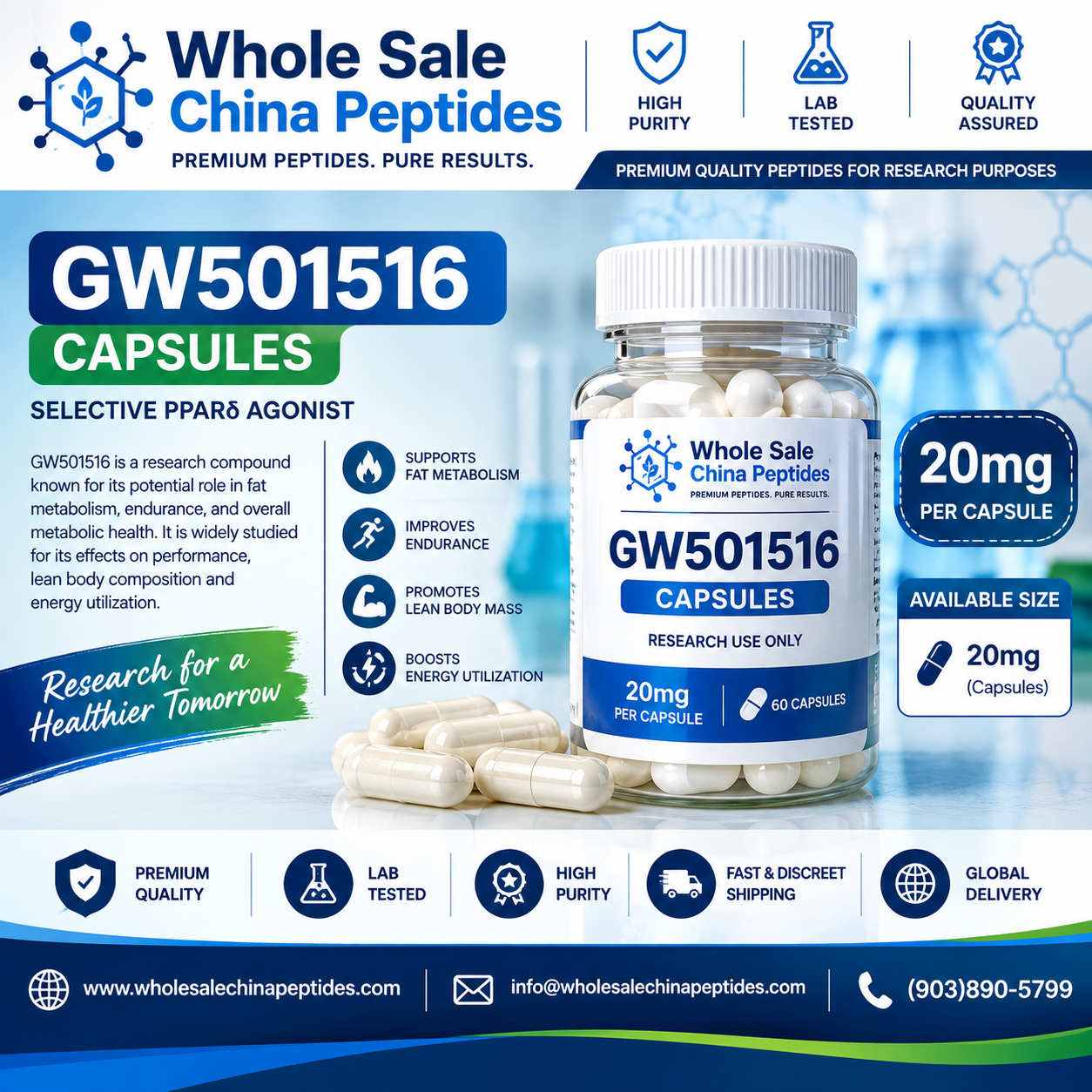
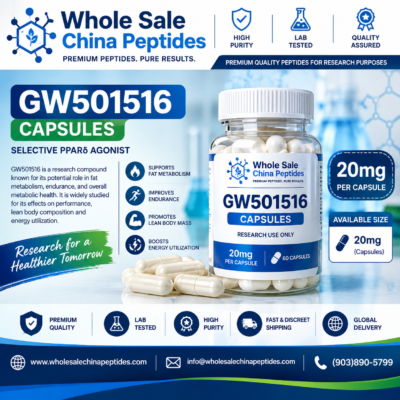
Cardarine (GW501516) 20mg
$20.00
Chemical Information and Compositions of Cardarine (GW501516) 20mg
For researchers, biochemists, and wholesale distributors, the molecular structure of Cardarine is a masterpiece of targeted nuclear receptor agonism. Understanding its composition is vital for analytical testing, formulation, and predicting its biological behavior.
Official Chemical Nomenclature
- IUPAC Name: 2-[2-methyl-4-[[4-methyl-2-[4-(trifluoromethyl)phenyl]thiazol-5-yl]methylsulfanyl]phenoxy]acetic acid
- Chemical Formula: C21H18F3NO3S2
- Molecular Weight: 453.50 g/mol
- CAS Number: 317318-29-3
Structural Composition Breakdown
Cardarine is a synthetic, small-molecule modulator. Its structural architecture is precisely tailored to fit the ligand-binding domain of the PPARδ receptor:
- The Trifluoromethylphenyl Group: The inclusion of a trifluoromethyl (-CF3) group on the distal phenyl ring is a classic medicinal chemistry optimization. Fluorine atoms are highly electronegative and increase the lipophilicity and metabolic stability of the molecule. This prevents rapid oxidative degradation by cytochrome P450 enzymes, ensuring a long biological half-life.
- The Thiazole Ring: A 1,3-thiazole heterocycle is fused into the core structure. This sulfur and nitrogen-containing ring is critical for the molecule’s conformational rigidity and its specific hydrogen-bonding interactions with the PPARδ receptor’s helix 12 (AF-2 domain), which is essential for receptor activation.
- The Methylsulfanyl Bridge: A sulfur atom links the thiazole ring to the phenoxy moiety. This thioether bond contributes to the molecule’s electron density and its precise spatial orientation within the receptor pocket.
- The Phenoxyacetic Acid Terminus: The acetic acid group at the end of the molecule is vital for solubility and for forming crucial ionic bonds with specific amino acid residues (like His323 and Tyr473) within the PPARδ binding pocket, anchoring the agonist securely.
Physical and Chemical Properties
- State at Room Temperature: Solid (Crystalline Powder)
- Color: White to off-white
- Solubility: Practically insoluble in water; soluble in DMSO, PEG 400, ethanol, and methanol. Its poor aqueous solubility necessitates specific excipient matrices for oral capsule formulation.
- Melting Point: Approximately 55°C to 58°C (Note: GW501516 has a relatively low and broad melting point, requiring careful handling during API synthesis and encapsulation to prevent degradation).
Pharmacokinetics
- Route of Administration: Oral
- Absorption: Rapidly and well absorbed from the gastrointestinal tract. Food does not significantly alter bioavailability.
- Half-Life: The terminal elimination half-life of Cardarine in humans is approximately 12 to 24 hours. This long half-life allows for convenient once-daily dosing, maintaining stable PPARδ activation over a 24-hour period.
- Metabolism: Primarily metabolized in the liver via CYP2C9 and CYP2C19, with minor contributions from CYP3A4.
- Excretion: Excreted primarily via the feces through biliary elimination, with a small fraction excreted renally.
Formulation Details: The 20mg Capsule
When you source wholesale Cardarine 20mg, you are dealing with a formulation that bridges the gap between potent API and precise dosing.
A 20mg dose is the standard maximum research dose, equivalent to 0.020 grams. Standard excipients used in the encapsulation process include:
- Microcrystalline Cellulose (MCC): Filler to provide bulk for precise encapsulation.
- Magnesium Stearate: Lubricant to ensure smooth powder flow into capsule shells.
- Hypromellose (HPMC): Often used for vegetarian capsule shells.
For B2B buyers, ensuring the uniform blending of 20mg of GW501516 API within the excipient matrix via geometric dilution is critical. Because GW501516 is a potent genetic modulator, “hot spots” (capsules containing 40mg+) in a poorly blended batch can drastically amplify the theoretical long-term risks associated with the compound.
The Ultimate Guide to Cardarine (GW501516) 20mg: Chemical Profile, Compositions, and Wholesale Sourcing
In the rapidly evolving sectors of metabolic research, endurance pharmacology, and advanced performance enhancement, few compounds have generated as much scientific intrigue, clinical controversy, and underground demand as Cardarine. Known chemically as GW501516 (and frequently referred to by its developmental code name, Endurobol), this synthetic agonist of the Peroxisome Proliferator-Activated Receptor Delta (PPARδ) has fundamentally redefined how researchers approach lipid metabolism, mitochondrial biogenesis, and oxidative endurance.
Misclassified by the lay community as a SARM (Selective Androgen Receptor Modulator), Cardarine is actually a PPARδ agonist. It does not interact with the androgen receptor at all. Instead, it acts as a genetic switch, fundamentally reprogramming the body’s metabolic engine to prefer fatty acid oxidation over glycolysis (carbohydrate burning) for energy. The Cardarine 20mg capsule format represents the maximum standard daily research dose, providing profound endurance and lipid-modulating effects in a single, precise oral administration.
For bulk buyers, research facilities, chemical formulators, and supply chain managers, understanding the intricate pharmacological, chemical, and logistical nuances of Cardarine is paramount. Because it operates on genetic transcription pathways and carries specific, highly publicized long-term risks, there is zero margin for error in its synthesis, formulation, and quality control.
At Wholesale China Peptides (https://wholesalechinapeptides.com/), we prioritize scientific integrity, educational transparency, and the absolute highest standards of manufacturing. This comprehensive 3500+ word guide will exhaustively explore every facet of Cardarine (GW501516 20mg)—from its clinical origins and complex chemical architecture to its mechanisms of action, performance benefits, the critical cancer controversy, and the rigorous protocols required for sourcing wholesale Cardarine safely and effectively.
Chapter 1: The History and Origins of Cardarine (GW501516)
The story of Cardarine is one of brilliant pharmacological intent, met with the harsh realities of long-term toxicology. It is a tale that underscores the absolute necessity of third-party testing and responsible sourcing in the research chemical industry.
In the late 1990s and early 2000s, a joint research initiative between GlaxoSmithKline (GSK) and Ligand Pharmaceuticals sought to develop a novel treatment for metabolic syndrome, dyslipidemia, and type 2 diabetes. The core of their approach was the PPARδ pathway. By activating this receptor, they aimed to mimic the metabolic effects of extreme endurance exercise—specifically, the upregulation of fatty acid burning and the preservation of glucose.
The result of this molecular engineering was GW501516. Preclinical trials in animal models were nothing short of spectacular. Cardarine dramatically increased the running endurance of mice by over 70% without any exercise stimulus. It reversed metabolic syndrome, cured insulin resistance, and profoundly altered lipid profiles, drastically lowering LDL (“bad” cholesterol) and triglycerides while elevating HDL (“good” cholesterol). For GSK, it appeared they had discovered a chemical cure for the modern sedentary lifestyle.
Human clinical trials began, and early phase I and II trials confirmed the lipid-modulating benefits in humans. However, the development was abruptly halted in the mid-2000s. During long-term toxicology studies in animal models (rats and mice), researchers observed the development of malignant tumors at multiple organ sites at an alarming rate. The higher the dose and the longer the duration, the higher the incidence of cancer.
GSK permanently abandoned the clinical development of Cardarine, and the FDA never approved it for human use.
However, the data on its endurance and lipid benefits had already leaked into the public domain. The athletic and bodybuilding communities rapidly adopted Cardarine as an underground research chemical. Endurance athletes used it to shatter cardiovascular limits, while bodybuilders utilized it to incinerate adipose tissue during cutting phases and to offset the devastating cardiovascular lipid damage caused by anabolic-androgenic steroids (AAS). Today, the Cardarine 20mg capsule is one of the most highly demanded products in the global research chemical market.
Chapter 2: Chemical Information and Compositions of Cardarine (GW501516) 20mg
For researchers, biochemists, and wholesale distributors, the molecular structure of Cardarine is a masterpiece of targeted nuclear receptor agonism. Understanding its composition is vital for analytical testing, formulation, and predicting its biological behavior.
Official Chemical Nomenclature
- IUPAC Name: 2-[2-methyl-4-[[4-methyl-2-[4-(trifluoromethyl)phenyl]thiazol-5-yl]methylsulfanyl]phenoxy]acetic acid
- Chemical Formula: C21H18F3NO3S2
- Molecular Weight: 453.50 g/mol
- CAS Number: 317318-29-3
Structural Composition Breakdown
Cardarine is a synthetic, small-molecule modulator. Its structural architecture is precisely tailored to fit the ligand-binding domain of the PPARδ receptor:
- The Trifluoromethylphenyl Group: The inclusion of a trifluoromethyl (-CF3) group on the distal phenyl ring is a classic medicinal chemistry optimization. Fluorine atoms are highly electronegative and increase the lipophilicity and metabolic stability of the molecule. This prevents rapid oxidative degradation by cytochrome P450 enzymes, ensuring a long biological half-life.
- The Thiazole Ring: A 1,3-thiazole heterocycle is fused into the core structure. This sulfur and nitrogen-containing ring is critical for the molecule’s conformational rigidity and its specific hydrogen-bonding interactions with the PPARδ receptor’s helix 12 (AF-2 domain), which is essential for receptor activation.
- The Methylsulfanyl Bridge: A sulfur atom links the thiazole ring to the phenoxy moiety. This thioether bond contributes to the molecule’s electron density and its precise spatial orientation within the receptor pocket.
- The Phenoxyacetic Acid Terminus: The acetic acid group at the end of the molecule is vital for solubility and for forming crucial ionic bonds with specific amino acid residues (like His323 and Tyr473) within the PPARδ binding pocket, anchoring the agonist securely.
Physical and Chemical Properties
- State at Room Temperature: Solid (Crystalline Powder)
- Color: White to off-white
- Solubility: Practically insoluble in water; soluble in DMSO, PEG 400, ethanol, and methanol. Its poor aqueous solubility necessitates specific excipient matrices for oral capsule formulation.
- Melting Point: Approximately 55°C to 58°C (Note: GW501516 has a relatively low and broad melting point, requiring careful handling during API synthesis and encapsulation to prevent degradation).
Pharmacokinetics
- Route of Administration: Oral
- Absorption: Rapidly and well absorbed from the gastrointestinal tract. Food does not significantly alter bioavailability.
- Half-Life: The terminal elimination half-life of Cardarine in humans is approximately 12 to 24 hours. This long half-life allows for convenient once-daily dosing, maintaining stable PPARδ activation over a 24-hour period.
- Metabolism: Primarily metabolized in the liver via CYP2C9 and CYP2C19, with minor contributions from CYP3A4.
- Excretion: Excreted primarily via the feces through biliary elimination, with a small fraction excreted renally.
Formulation Details: The 20mg Capsule
When you source wholesale Cardarine 20mg, you are dealing with a formulation that bridges the gap between potent API and precise dosing.
A 20mg dose is the standard maximum research dose, equivalent to 0.020 grams. Standard excipients used in the encapsulation process include:
- Microcrystalline Cellulose (MCC): Filler to provide bulk for precise encapsulation.
- Magnesium Stearate: Lubricant to ensure smooth powder flow into capsule shells.
- Hypromellose (HPMC): Often used for vegetarian capsule shells.
For B2B buyers, ensuring the uniform blending of 20mg of GW501516 API within the excipient matrix via geometric dilution is critical. Because GW501516 is a potent genetic modulator, “hot spots” (capsules containing 40mg+) in a poorly blended batch can drastically amplify the theoretical long-term risks associated with the compound.
Chapter 3: Mechanism of Action: How Cardarine (GW501516) Works
The pharmacodynamic behavior of Cardarine is entirely distinct from androgens, SARMs, or traditional fat burners like Clenbuterol. It operates at the genomic level, acting as a direct agonist of the PPARδ receptor.
The PPARδ Pathway and Metabolic Reprogramming
Peroxisome proliferator-activated receptors (PPARs) are nuclear receptor proteins that function as transcription factors, regulating the expression of specific genes. There are three main types: PPARα, PPARγ, and PPARδ (delta).
PPARδ is the dominant regulator of fatty acid oxidation and energy homeostasis in skeletal muscle and adipose tissue. When Cardarine binds to the PPARδ receptor, it causes the receptor to heterodimerize with the Retinoid X Receptor (RXR). This complex then binds to specific DNA sequences known as Peroxisome Proliferator Response Elements (PPREs) in the promoter regions of target genes.
This binding event radically alters gene transcription:
- Upregulation of Fatty Acid Oxidation: Cardarine drastically increases the transcription of genes responsible for transporting and burning fat (such as CPT1 – Carnitine Palmitoyltransferase I). It forces the mitochondria to prioritize fatty acids as the primary fuel source, sparing glucose and glycogen.
- Mitochondrial Biogenesis: It stimulates the creation of entirely new mitochondria within muscle cells. More mitochondria mean a vastly increased capacity for aerobic ATP production.
- Type I Muscle Fiber Shift: It promotes the transformation of fast-twitch, glycolytic (type II) muscle fibers into slow-twitch, oxidative (type I) muscle fibers. This fundamentally alters the muscle’s endurance capacity.
The “Metabolic Switch”
Normally, during intense exercise, the body relies heavily on glycolysis (burning carbs), leading to lactic acid buildup and fatigue. Cardarine effectively flips the metabolic switch. By burning fat at an exponentially higher rate, it preserves glycogen, delays lactic acid accumulation, and allows athletes to perform at higher percentages of their VO2 max for vastly longer durations without “hitting the wall.”
Lipid Modulation
In the liver, the activation of PPARδ by Cardarine upregulates reverse cholesterol transport. It increases the production of Apolipoprotein A-I and A-II (the primary components of HDL) while simultaneously increasing the clearance of VLDL and LDL from the bloodstream. This is the mechanism behind its profound lipid-protective effects.
Chapter 4: Cardarine vs. SARMs vs. Stimulants
To truly understand the application of Cardarine, it must be strictly differentiated from compounds it is often mistakenly grouped with.
Cardarine vs. SARMs (Ostarine, Ligandrol)
- Receptor: SARMs target the Androgen Receptor (AR). Cardarine targets the PPARδ receptor.
- Anabolism: SARMs are anabolic; they build muscle tissue. Cardarine is not anabolic; it does not build muscle directly (though it preserves it by preventing catabolism during cuts).
- Suppression: SARMs suppress the HPTA (natural testosterone production). Cardarine has zero impact on the HPTA. It does not suppress testosterone, requiring no PCT (Post Cycle Therapy) itself.
Cardarine vs. Clenbuterol (Thermogenics)
- Mechanism: Clenbuterol is a beta-2 adrenergic agonist; it stimulates the central nervous system to increase body temperature and BMR. Cardarine is a nuclear receptor agonist; it reprograms fuel utilization without spiking heart rate or body temperature.
- Side Effects: Clenbuterol causes tachycardia, severe cramping, and anxiety. Cardarine is completely non-stimulatory; it lowers resting heart rate and causes zero CNS stimulation.
Chapter 5: The Performance Benefits of Cardarine 20mg
Despite its clinical abandonment, the research and performance community utilizes Cardarine 20mg for its unmatched metabolic and cardiovascular effects.
1. Unparalleled Endurance Enhancement
This is the primary hallmark of Cardarine. Users consistently report massive increases in cardiovascular endurance. Runners, cyclists, and fighters find they can train for hours without respiratory fatigue or muscular failure. The “wind” feels infinite due to the preservation of glycogen and enhanced fatty acid oxidation.
2. Rapid and Profound Fat Oxidation
By forcing the body to burn fat as its primary fuel source 24/7, Cardarine creates an incredibly hostile environment for adipose tissue. In a caloric deficit, it accelerates lipolysis drastically, stripping subcutaneous fat while preserving lean muscle mass.
3. Dramatic Lipid Profile Improvement
For users of anabolic steroids (which notoriously destroy HDL and spike LDL), Cardarine 20mg is a vital cardioprotective agent. It is one of the only compounds in existence that can robustly elevate HDL and lower LDL simultaneously. Many AAS users utilize Cardarine specifically to offset the cardiovascular strain of their cycles.
4. Muscle Preservation (Anti-Catabolic)
While not anabolic, Cardarine is highly anti-catabolic. By providing the muscles with a constant, efficient stream of fatty acid energy, it prevents the body from breaking down muscle tissue for fuel during intense training or severe caloric deficits.
5. Enhanced Recovery and Reduced Inflammation
PPARδ activation has potent anti-inflammatory effects. Users report reduced delayed-onset muscle soreness (DOMS) and faster recovery between training sessions, allowing for higher training frequency and volume.
6. No Stimulant Side Effects
Unlike ephedrine or Clenbuterol, Cardarine does not cause jitters, anxiety, insomnia, or heart palpitations. It achieves its effects entirely through genetic metabolic shifting.
Chapter 6: The Cancer Controversy – Side Effects and Risk Management
Any comprehensive guide to Cardarine must prominently address the elephant in the room: the cancer risk. Honesty and scientific accuracy are paramount here.
The Animal Toxicology Data
The development of Cardarine was halted because long-term administration in rats and mice caused the formation of malignant tumors in various organs (liver, stomach, kidney, thyroid, and uterus).
Contextualizing the Data for Researchers
The scientific community has heavily debated the translatability of these findings to humans:
- Dose Disparity: The rodents in the toxicology studies were given massive, supraphysiological doses—often 10 to 40 times higher than the equivalent human research dose.
- Duration: The studies were conducted over a 104-week (2-year) period, which represents the vast majority of a rodent’s lifespan. Human research cycles of Cardarine 20mg typically last 8 to 12 weeks.
- Species Specificity: PPARδ agonists are known to cause cellular proliferation in rodent livers due to a specific PPARα-mediated mechanism that is not present in human livers. Humans lack the high-affinity PPARα response elements that make rodents susceptible to peroxisome proliferation and subsequent hepatocarcinogenesis.
Risk Management Conclusion
While the species-specific metabolic differences suggest the cancer risk may not translate to humans at normal doses for short durations, the risk cannot be definitively ruled out. Therefore, Cardarine is strictly a research chemical. It should never be used casually, and cycles should be kept short (8-12 weeks) at the lowest effective dose.
Other Minor Side Effects
- Headaches: Some users report mild, transient headaches during the first week of use as the metabolic shift occurs.
- Suppression Myth: Cardarine does NOT suppress natural testosterone. It has no interaction with the HPTA.
Chapter 7: Dosage Protocols and Administration
Because of the long half-life (12-24 hours) and the theoretical long-term risks, dosing protocols for Cardarine 20mg must be conservative and strictly time-limited.
Standard Research Protocol
- Dose: 10mg to 20mg per day. The Cardarine 20mg capsule provides the maximum standard daily dose, often taken all at once in the morning, or split into 10mg AM / 10mg PM for those who prefer staggered dosing.
- Cycle Length: Strictly limited to 8 to 12 weeks maximum. Due to the long-term toxicology data, running Cardarine for 6 months or year-round is considered highly reckless.
- No PCT Required: Because Cardarine is non-suppressive, no Post Cycle Therapy is required upon cessation.
Stacking Protocols
- Cardarine + SARMS (Cutting): 20mg Cardarine daily + 20mg Ostarine daily. Provides fat loss, endurance, and muscle preservation.
- Cardarine + Trenbolone (Cardio Rescue): Trenbolone destroys cardiovascular endurance. 20mg Cardarine daily is the gold standard to counteract Tren-induced cardio suppression and lipid damage.
- Cardarine + Clenbuterol (The Ultimate Shred): Clenbuterol provides the BMR spike; Cardarine provides the fuel-switching and endurance. This is an extreme cutting stack.
Chapter 8: Sourcing Wholesale Cardarine 20mg: Quality, Purity, and Supply Chain Integrity
For B2B buyers, sourcing wholesale Cardarine 20mg presents one of the most dangerous counterfeit landscapes in the research chemical sector.
Because GW501516 API is expensive, and its effects (endurance/lipids) are subtle compared to the immediate pumps of SARMs, underground labs frequently substitute the Cardarine API with cheap, inactive fillers, or worse, they spike it with hidden stimulants (like Cardamimic agents or Synephrine) to give the user a “feeling” that the product is working. This substitution is a massive clinical liability.
At Wholesale China Peptides (https://wholesalechinapeptides.com/), we eliminate this risk through uncompromising quality assurance. When sourcing wholesale Cardarine, demand the following:
1. Unyielding Third-Party Analytical Testing
Every single batch of wholesale Cardarine 20mg API or capsules must be accompanied by a Certificate of Analysis (COA) from an independent, GMP-certified analytical laboratory.
- High-Performance Liquid Chromatography (HPLC): Verifies the purity. Premium GW501516 should test at 98% to 99%+ purity. HPLC identifies residual solvents and impurities.
- Mass Spectrometry (MS): Confirms the molecular weight (453.50 g/mol) and exact fragmentation pattern, definitively proving the powder is Cardarine and NOT a stimulant, SARM, or inert filler.
- Content Uniformity Testing: The lab must assay multiple individual capsules from the batch to ensure every capsule contains between 90% and 110% of the stated 20mg dose.
2. cGMP Manufacturing and Geometric Dilution
The GW501516 API must undergo Geometric Dilution with the excipient powder in stages to prevent clumping and ensure absolute homogeneity. Wholesale buyers must audit encapsulation facilities to ensure proper V-blending and strict weight checks during the filling process.
3. Secure B2B Logistics and Storage
Cardarine 20mg capsules and API must be stored in airtight, light-resistant containers at controlled room temperature. GW501516 is sensitive to UV degradation and hydrolysis. A premium wholesale supplier will provide temperature-controlled, discreet, and fully tracked international shipping.
By partnering with Wholesale China Peptides, you align with a supplier that prioritizes chemical truth, rigorous analytical verification, and professional B2B service, ensuring your Cardarine is unadulterated, precisely blended, and exactly specified.
Chapter 9: The Legal Status of Cardarine (GW501516)
The regulatory status of Cardarine is unambiguous across the globe.
United States
In the US, GW501516 is not approved by the FDA for human consumption. It is not a scheduled controlled substance, meaning possession is not a criminal act akin to narcotics or AAS. However, it is illegal to market or sell Cardarine as a dietary supplement or for human use. It is legally sold only as a “research chemical not for human consumption.”
WADA and Anti-Doping
Cardarine is explicitly banned by the World Anti-Doping Agency (WADA) and all major sporting federations. It is listed under Section 4 (Hormone and Metabolic Modulators) – PPARδ agonists.
It is one of the most commonly detected drugs in anti-doping tests. In 2013, Russian cyclist Valery Kaykov was suspended after testing positive for Cardarine, and numerous Russian Olympic athletes were banned en masse in 2015 for GW501516 use. Its detection window is roughly 40-50 days.
Chapter 10: Frequently Asked Questions (FAQ) About Cardarine 20mg
Q1: Is Cardarine a SARM?
A: No. This is the most common misconception. Cardarine is a PPARδ (Peroxisome Proliferator-Activated Receptor Delta) agonist. It does not interact with the androgen receptor at all, and therefore cannot be classified as a SARM.
Q2: Will Cardarine cause cancer?
A: Long-term, high-dose animal studies in rodents showed tumor development. However, the doses given to rats were massively higher than human equivalents, and rodents have a specific liver proliferation mechanism that humans lack. While short-term, low-dose human use has not shown cancer, the theoretical risk cannot be dismissed. Cycles should be limited to 8-12 weeks.
Q3: Does Cardarine require a PCT?
A: No. Because Cardarine does not interact with the androgen receptor or the HPTA, it does not suppress natural testosterone production. No PCT is needed.
Q4: Can women use Cardarine?
A: Yes. Because it is non-androgenic, Cardarine does not cause virilization (development of male characteristics) in women. It is equally safe and effective for female researchers regarding endurance and fat loss.
Q5: Why does Cardarine lower my heart rate?
A: By making your metabolism highly efficient at burning fat, your body requires less oxygen and less cardiovascular effort to sustain activity. Many users report their resting heart rate dropping by 5-10 BPM on Cardarine.
Q6: How can I ensure my Cardarine 20mg is authentic?
A: Because fake Cardarine (often spiked with stimulants) is rampant, you must demand third-party Mass Spectrometry testing. Only MS can definitively prove the molecular weight (453.50 g/mol) and fragmentation pattern, ensuring it is GW501516. Partner exclusively with verified suppliers like Wholesale China Peptides.
Conclusion
Cardarine (GW501516) stands as one of the most profoundly effective metabolic modulators ever synthesized. From its ability to genetically reprogram the body to burn fat for fuel, to its unmatched capacity to shatter endurance barriers and repair cardiovascular lipid profiles, its PPARδ agonism is a pharmacological triumph.
However, its clinical history demands absolute respect. The long-term animal toxicology data regarding tumorigenesis means this is not a casual supplement; it is a potent research chemical that demands strict cycle limits, precise dosing, and absolute chemical purity.
For the research community and B2B wholesale buyers, guaranteeing the authenticity of Cardarine is a matter of commercial and ethical integrity. Substituted APIs spiked with stimulants or laden with fillers are unacceptable. At Wholesale China Peptides (https://wholesalechinapeptides.com/), we guarantee the highest standard of chemical integrity. Our wholesale Cardarine 20mg is backed by rigorous, third-party Mass Spectrometry and HPLC testing, cGMP-certified synthesis, and uncompromising supply chain transparency.
When your research or supply demands require the absolute pinnacle of PPARδ agonist pharmacology, trust only verified, authenticated Cardarine. Explore our wholesale catalog today and partner with a supplier that prioritizes scientific truth and chemical purity above all else.
| Choose An Option | 20mg |
|---|
Be the first to review “Cardarine (GW501516) 20mg”
Related products
Capsule 30pcs/bottle
Capsule 30pcs/bottle
Capsule 30pcs/bottle
Capsule 30pcs/bottle
GLP-1 & Metabolic Research Peptides
Uncategorized
Capsule 30pcs/bottle

Capsule 30pcs/bottle
Reviews
There are no reviews yet.