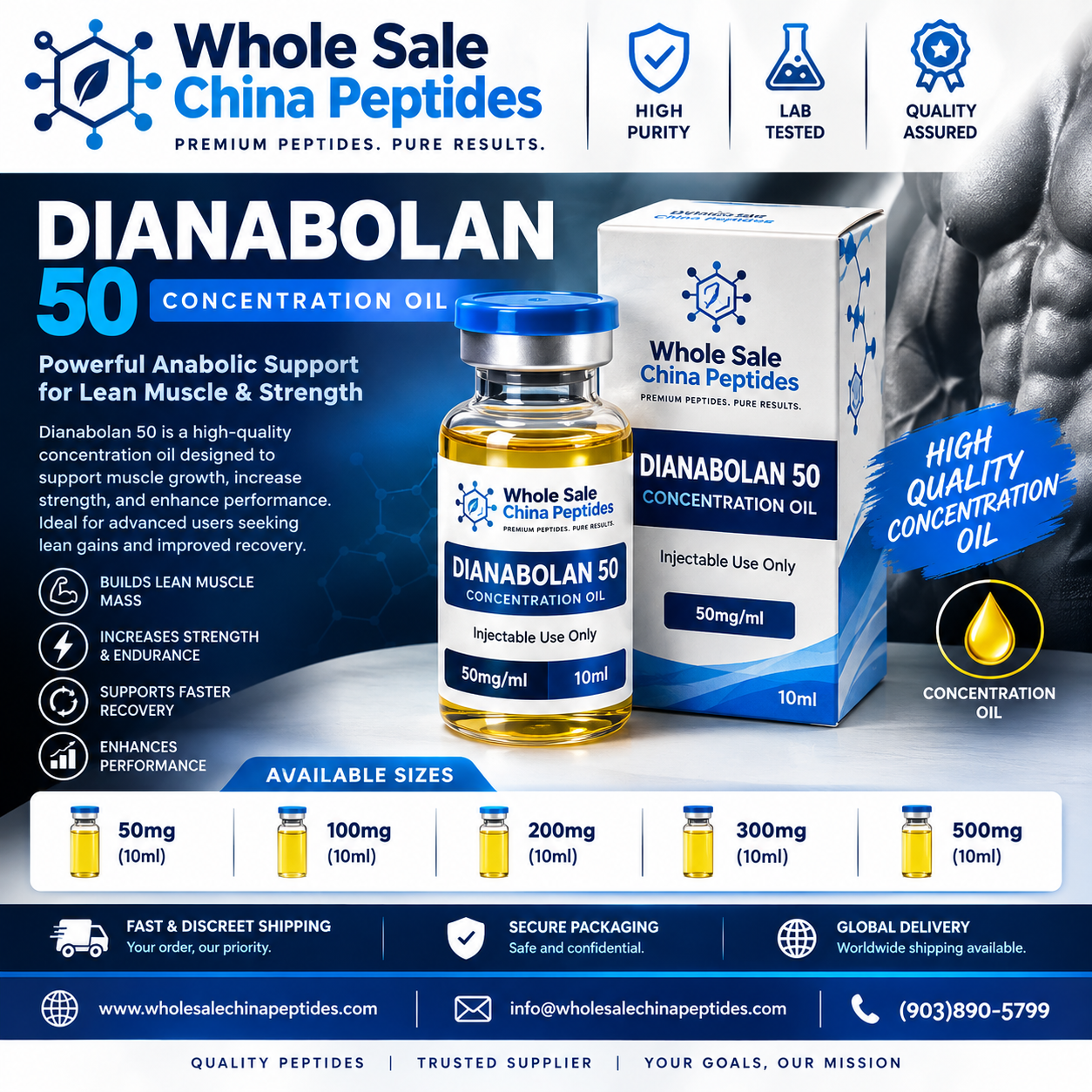
Dianabolan 50
Price range: $12.00 through $25.00
Chemical Information and Molecular Architecture
To truly understand how Dianabolan 50 behaves in laboratory assays, chromatographic analysis, and experimental models, one must examine the intricate molecular architecture of methandrostenolone.
Molecular Specifications of Methandrostenolone
- Chemical Name: 17-alpha-methyl-17beta-hydroxy-androsta-1,4-dien-3-one
- Base Chemical Formula: C20H28O2
- Molecular Weight: 300.44 g/mol
- Core Structure: Methandrostenolone is a structurally altered derivative of testosterone. It differs from the primary human androgen by two primary chemical modifications:
- Addition of a double bond between carbon 1 and carbon 2: This specific structural change at the A-ring slows down the rate of hepatic metabolism and reduces the hormone’s relative binding affinity for sex hormone-binding globulin (SHBG), enhancing its free circulating availability.
- C17-alpha methylation: The addition of a methyl group at the 17th carbon position protects the hormone from immediate breakdown, allowing it to survive oral ingestion (though in Dianabolan 50, this methylation remains part of the molecule’s core structure and influences its overall metabolic pathway).
Receptor Interactions and Pharmacodynamics
Unlike testosterone, methandrostenolone exhibits a relatively low binding affinity for the classical androgen receptor (AR). This paradox has fascinated endocrinologists for decades: despite its low direct receptor binding, Dianabolan 50 demonstrates extreme anabolic activity in vivo. Modern pharmacological research suggests that a significant portion of methandrostenolone’s anabolic signaling occurs through non-genomic pathways, upregulation of growth factors, and unique protein-synthesis cascades that operate independently of traditional nuclear receptor binding.
Furthermore, methandrostenolone aromatizes readily into a potent alkylated estrogen (methylestradiol), making it a valuable subject of study in estrogenic conversion, water retention, and aromatase interaction research models. Studying these unique pathways via Dianabolan 50 provides researchers with cleaner analytical models free from oral excipient and binder interference.
Comprehensive Guide to Dianabolan 50: Chemical Architecture, Composition, and Wholesale Supply
In the sophisticated landscape of advanced biochemical research, clinical endocrinology, and pharmaceutical compounding, the evolution of delivery systems has consistently pushed the boundaries of traditional administration. While foundational pharmacological research often relies on standardized oral tablets or conventional water- and oil-based injectables, specialized laboratory frameworks frequently demand alternative delivery mechanisms to study pharmacokinetics, bioavailability, and metabolic pathways. Among elite concentration oils, Dianabolan 50 stands out as a fascinating masterclass in pharmaceutical formulation—re-engineering a legendary active pharmaceutical ingredient into a specialized 50mg/mL oil-based matrix.
At Wholesale China Peptides, we pride ourselves on being a premier global supplier of certified research compounds, raw materials, and professional-grade specialized solutions. Whether your laboratory is engaged in advanced chromatographic analysis, endocrine receptor affinity studies, or large-scale B2B distribution, understanding the structural science, precise composition, solubility mechanics, and solvent chemistry of Dianabolan 50 is essential for maintaining absolute experimental accuracy.
In this comprehensive, exhaustive technical guide, we will dive deep into the molecular architecture, chemical properties, formulation challenges, physical traits, and wholesale availability of Dianabolan 50.
1. What is Dianabolan 50?
Dianabolan 50 is an advanced, highly specialized oil-based solution formulated to deliver methandrostenolone—commonly recognized in medical history and popular literature under the trade name Dianabol—at a precise, robust concentration of 50 milligrams per milliliter.
Historically, methandrostenolone has been synthesized, distributed, and administered almost exclusively as an oral tablet. Developed in the mid-20th century under the guidance of Dr. John Ziegler in collaboration with Ciba Pharmaceuticals, it revolutionized medical and endocrine research due to its profound anabolic potency and unique structural interactions with androgen receptors. However, oral administration of methandrostenolone requires C17-alpha alkylation to survive first-pass hepatic metabolism, which inherently subjects the liver to significant metabolic stress and creates a sharp, short-lived pharmacokinetic peak in systemic circulation.
To explore alternative pharmacokinetic profiles, bypass immediate gastrointestinal degradation, and study lipid-depot absorption rates, modern pharmaceutical compounders and researchers developed Dianabolan 50. By suspending the active methandrostenolone raw powder in a sterile, pharmaceutical-grade carrier oil matrix, laboratories can analyze how this powerful compound behaves when introduced into lipid-rich environments rather than processed exclusively through the digestive tract.
2. The Precise Composition and Formulation Science of Dianabolan 50
Formulating a stable, high-purity batch of Dianabolan 50 requires absolute mastery of solvent chemistry, molecular saturation thresholds, and carrier oil physics. Methandrostenolone powder has specific solubility limits; unlike esterified testosterone derivatives that dissolve smoothly into lipid vehicles, unesterified methandrostenolone powder requires an expertly balanced solvent system to prevent the active hormone from precipitating or “crashing” out of solution.
To achieve a stable, homogeneous concentration of 50mg/mL, pharmaceutical compounders must utilize a precise ratio of excipients. A standard, highly optimized pharmaceutical-grade formulation of Dianabolan 50 comprises the following core components:
Active Pharmaceutical Ingredient (API) Breakdown per 1 mL:
- Methandrostenolone Base (50 mg): The primary active pharmaceutical ingredient. Unlike esterified compounds, methandrostenolone does not possess an attached ester chain (such as enanthate or cypionate); the raw, unesterified steroid molecule itself is suspended directly within the lipid carrier matrix.
Supporting Excipients and Carrier Matrix:
- Carrier Oil (Pharmaceutical Grade, q.s.): Low-viscosity, highly stable lipid vehicles such as Grapeseed Oil, Fractionated Coconut Oil (MCT), or Sesame Oil serve as the hydrophobic solvent base and facilitate the depot absorption model.
- Cosolvent (Benzyl Benzoate – BB): Absolutely critical in Dianabolan 50 formulations. Because methandrostenolone raw powder does not naturally dissolve easily in pure oil at a dense 50mg/mL concentration, Benzyl Benzoate is utilized in precise percentages to act as a powerful organic cosolvent, reducing intermolecular forces and keeping the active hormone completely dissolved in a stable, liquid state.
- Preservative/Antimicrobial Agent (Benzyl Alcohol – BA): Typically added at a concentration of 1% to 2% to maintain sterility and protect the multi-use or single-use vial from microbial contamination during ongoing laboratory handling.
3. Chemical Information and Molecular Architecture
To truly understand how Dianabolan 50 behaves in laboratory assays, chromatographic analysis, and experimental models, one must examine the intricate molecular architecture of methandrostenolone.
Molecular Specifications of Methandrostenolone
- Chemical Name: 17-alpha-methyl-17beta-hydroxy-androsta-1,4-dien-3-one
- Base Chemical Formula: C20H28O2
- Molecular Weight: 300.44 g/mol
- Core Structure: Methandrostenolone is a structurally altered derivative of testosterone. It differs from the primary human androgen by two primary chemical modifications:
- Addition of a double bond between carbon 1 and carbon 2: This specific structural change at the A-ring slows down the rate of hepatic metabolism and reduces the hormone’s relative binding affinity for sex hormone-binding globulin (SHBG), enhancing its free circulating availability.
- C17-alpha methylation: The addition of a methyl group at the 17th carbon position protects the hormone from immediate breakdown, allowing it to survive oral ingestion (though in Dianabolan 50, this methylation remains part of the molecule’s core structure and influences its overall metabolic pathway).
Receptor Interactions and Pharmacodynamics
Unlike testosterone, methandrostenolone exhibits a relatively low binding affinity for the classical androgen receptor (AR). This paradox has fascinated endocrinologists for decades: despite its low direct receptor binding, Dianabolan 50 demonstrates extreme anabolic activity in vivo. Modern pharmacological research suggests that a significant portion of methandrostenolone’s anabolic signaling occurs through non-genomic pathways, upregulation of growth factors, and unique protein-synthesis cascades that operate independently of traditional nuclear receptor binding.
Furthermore, methandrostenolone aromatizes readily into a potent alkylated estrogen (methylestradiol), making it a valuable subject of study in estrogenic conversion, water retention, and aromatase interaction research models. Studying these unique pathways via Dianabolan 50 provides researchers with cleaner analytical models free from oral excipient and binder interference.
4. Pharmacokinetics: Oral Ingestion vs. Oil-Based Depots
One of the primary research objectives surrounding Dianabolan 50 is comparing its pharmacokinetic behavior against traditional oral tablets.
The Oral Pharmacokinetic Curve
When administered orally, methandrostenolone is absorbed rapidly through the gastrointestinal mucosa, entering the portal vein directly and subjecting the liver to immediate first-pass metabolism. This results in a sharp, high-concentration systemic peak within 1 to 3 hours post-administration, followed by a rapid elimination half-life of roughly 3 to 5 hours. While effective for inducing rapid biological responses, this sharp spike places intense acute stress on hepatic tissue and requires frequent dosing schedules to maintain stable plasma levels.
The Oil Depot Pharmacokinetic Curve
When formulated as Dianabolan 50 and introduced into a lipid depot (such as subcutaneous or intramuscular experimental models), the physical dynamics change entirely:
- Delayed Systemic Entry: The hydrophobic carrier oil and cosolvent matrix form a localized micro-reservoir. The raw methandrostenolone molecules must slowly diffuse out of the lipid droplet and into the surrounding interstitial fluid.
- Altered Hepatic Processing: By entering the lymphatic and systemic circulation rather than dumping directly into the portal vein in a single massive wave, the compound alters its initial metabolic clearance rate, offering researchers a novel window to study alternative systemic pathways.
- Sustained Plasma Levels: Rather than experiencing the violent peaks and troughs associated with multiple daily oral doses, oxyolrol-like or Dianabolan oil solutions provide a smoother, more controlled release curve, reducing acute metabolic shock while maintaining consistent active concentrations over an extended observational window.
5. Formulation Challenges: Overcoming Precipitation and “Crashing”
Manufacturing a high-concentration methandrostenolone oil like Dianabolan 50 is an advanced exercise in chemical engineering and thermodynamic equilibrium.
The Thermodynamics of Suspension
Methandrostenolone powder does not possess natural lipophilic ester chains (like enanthate, cypionate, or decanoate) that naturally integrate into carrier oils. Instead, the raw steroid crystal must be forced into solution using specialized polar solvents. If the ratio of Benzyl Benzoate (BB) to carrier oil is miscalculated by even a fraction of a percent, or if the solution is subjected to cooler ambient temperatures during shipping or storage, the methandrostenolone molecules will rapidly aggregate, resulting in visible crystal formation—a laboratory phenomenon known as “crashing.”
At Wholesale China Peptides, our advanced pharmaceutical manufacturing protocols utilize precision thermodynamic blending, strict co-solvent optimization, and rigorous HPLC batch verification to ensure that every vial of Dianabolan 50 remains completely stable, homogenous, and resistant to crystallization under recommended storage parameters.
6. Physical Properties and Quality Control Standards
For laboratory technicians, analytical chemists, and wholesale buyers, recognizing the physical characteristics and quality control benchmarks of high-purity Dianabolan 50 is critical for validation:
- Appearance: A clear, bright yellow to golden oil solution, entirely free from suspended particulates, haze, microscopic debris, or crystal sedimentation.
- Viscosity: Low to moderate. Because Dianabolan 50 utilizes balanced carrier oils and precise cosolvent ratios, the fluid flows smoothly through laboratory filtration and extraction equipment when maintained at controlled room temperatures.
- Solubility: Insoluble in water; highly soluble in organic solvents, specialized alcohols, and lipid/oil matrices.
- Storage Recommendations: Store in a controlled environment at room temperature (20°C to 25°C). Protect Dianabolan 50 from prolonged exposure to direct UV light and extreme cold. Note: If minor crystallization occurs due to accidental exposure to extreme cold during international transit, gentle warming of the sealed vial in a warm water bath will safely redissolve the methandrostenolone back into solution without degrading molecular integrity.
- Analytical Verification: Every production lot of Dianabolan 50 supplied by Wholesale China Peptides undergoes mandatory High-Performance Liquid Chromatography (HPLC) assay testing to verify that the exact 50mg/mL concentration matches specifications with purity levels exceeding 99%.
7. Why Source Dianabolan 50 from Wholesale China Peptides?
Navigating the global marketplace for advanced research chemicals, raw hormone powders, and specialized finished oil solutions requires an uncompromising commitment to supply chain integrity. Inferior manufacturing, inaccurate dosing, or contaminated carrier oils can compromise months of laboratory research.
When you partner with Wholesale China Peptides for your Dianabolan 50 supply needs, you gain access to an elite tier of B2B manufacturing excellence:
- Certified Laboratory Purity: All our finished oil formulations and raw ingredients are backed by verifiable HPLC certificates of analysis, ensuring absolute precision in milligram concentration and molecular structure.
- Advanced Sterile Manufacturing: Produced in state-of-the-art cleanroom environments utilizing pharmaceutical-grade filtration, strict aseptic techniques, and precise co-solvent ratios.
- Secure, Discrete Global Logistics: We understand the sensitive nature of international research supply chains. Our specialized packaging solutions are engineered to protect fragile glass vials, maintain thermal stability, and ensure seamless customs clearance worldwide.
- Scalable Wholesale Pricing: Whether you are an independent research institution, a compounding laboratory, or a large-scale distributor, our direct-to-consumer B2B pricing structures offer unmatched economic value without ever compromising on quality.
8. Frequently Asked Questions (FAQs)
1. What makes Dianabolan 50 different from traditional methandrostenolone oral tablets?
Traditional methandrostenolone (Dianabol) is produced as an oral tablet, which is absorbed through the digestive tract and undergoes immediate first-pass liver metabolism, creating a short 3-5 hour half-life. Dianabolan 50 is an oil-based injectable concentration oil designed to deliver methandrostenolone via a lipid depot, allowing researchers to study alternative delivery kinetics and systemic absorption pathways.
2. Is Dianabolan 50 water-soluble?
No. Dianabolan 50 is an oil-based formulation. Unesterified methandrostenolone is lipophilic (fat-soluble) and requires suspension in a pharmaceutical carrier oil with appropriate organic cosolvents (like benzyl benzoate) to create a stable, homogeneous solution for laboratory use.
3. What causes oil-based solutions like Dianabolan 50 to crystallize (“crash”)?
Crystallization occurs when active hormone powders fall out of the carrier oil solution, typically triggered by exposure to cold temperatures during transit or storage. Because unesterified methandrostenolone has a specific saturation threshold, Dianabolan 50 is formulated with precise co-solvents, but extreme cold can still cause minor molecular aggregation. Warming the vial gently in a warm water bath will safely redissolve the crystals back into a clear liquid.
4. How can I place a wholesale order for Dianabolan 50?
You can review our product catalog, examine batch specifications, and place secure bulk wholesale orders directly through our official platform at https://wholesalechinapeptides.com/. For specialized custom manufacturing, bulk institutional pricing, or specific HPLC documentation requests, please reach out directly to our customer support and sales engineering team.
Conclusion
The engineering of stable, high-purity specialized hormone solutions requires meticulous attention to organic chemistry, thermodynamic saturation thresholds, solvent ratios, and precision manufacturing. Dianabolan 50 remains an exceptional, highly innovative benchmark for modern biochemical research, endocrinology studies, and pharmaceutical compounding where alternative delivery mechanisms and precise active concentrations are required.
Trust Wholesale China Peptides as your premier B2B partner for certified research compounds, advanced oil solutions, and specialized formulations. Visit our website today to explore our comprehensive inventory, review our analytical testing reports, and secure your high-purity Dianabolan 50 supply.

| Choose An Option | 10ML, 20ML |
|---|
Be the first to review “Dianabolan 50”
Related products

OIL
OIL

OIL
Reviews
There are no reviews yet.