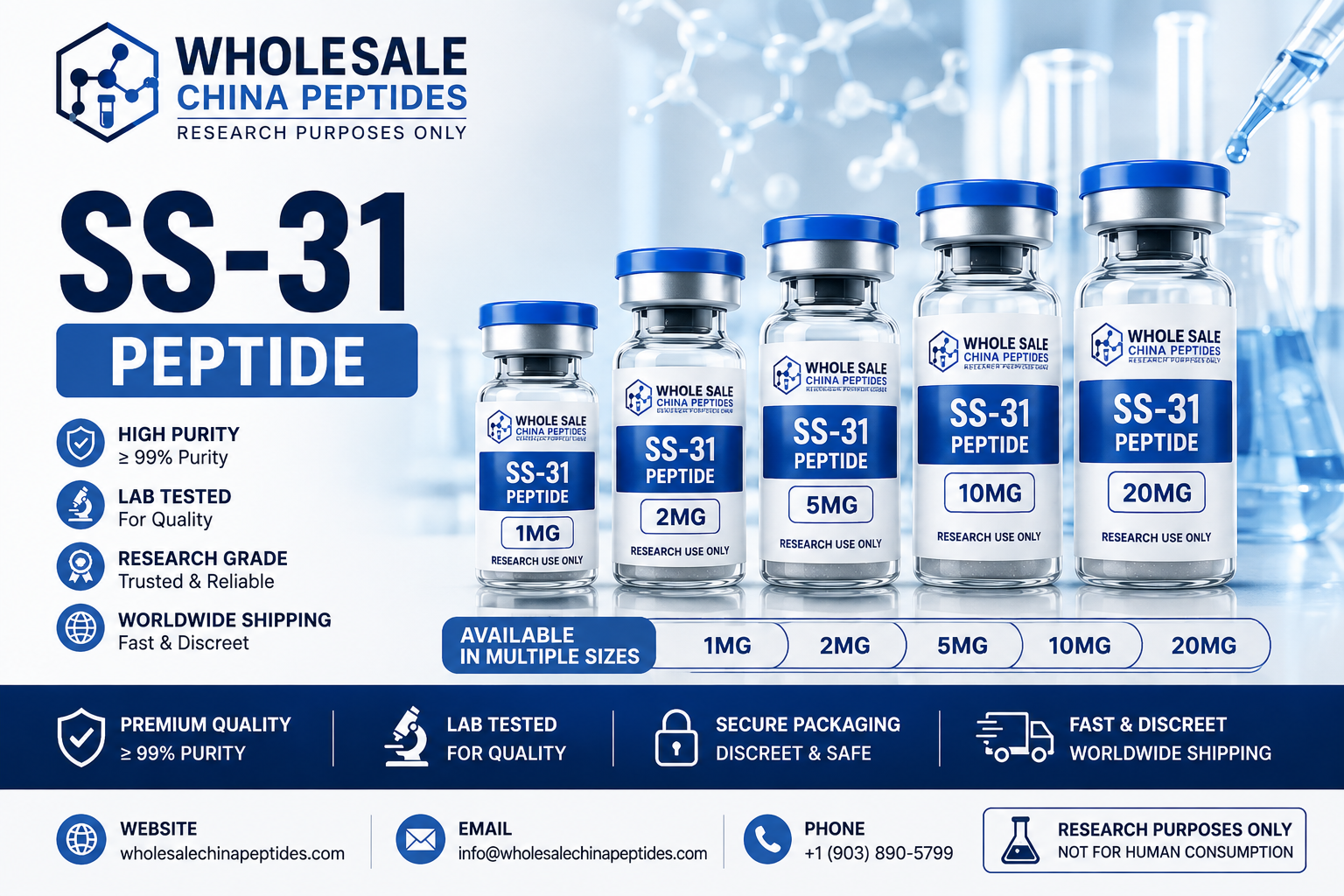
SS-31 Peptide
Price range: $70.00 through $220.00
SS-31 Peptide: Chemical Composition & Structure
Molecular Formula:
C₃₂H₅₀N₁₀O₅
Molecular Weight:
638.81 g/mol
Amino Acid Sequence:
D-Arg-Dmt-Lys-Phe-NH₂
Key Structural Features:
- Tetrapeptide (4 amino acids) – Small size allows for rapid absorption and mitochondrial targeting
- D-amino acids (D-Arg, Dmt) – Enhances stability and resistance to enzymatic degradation
- Cationic residues (Arg, Lys) – Critical for mitochondrial membrane penetration
- Aromatic residue (Phe) – Contributes to antioxidant activity
- Amidated C-terminus (Phe-NH₂) – Improves biological activity and half-life
Chemical Properties:
| Property | Details |
|---|---|
| Solubility | Water-soluble (reconstitute with bacteriostatic water) |
| Storage (Lyophilized) | -20°C (stable for 2+ years) |
| Storage (Reconstituted) | 2-8°C (stable for 7-14 days) |
| Half-Life | ~2-4 hours (IV), ~6-8 hours (SC) |
| Purity | ≥98% (HPLC-verified) |
Where to Buy High-Quality SS-31 Peptide for Research
For researchers seeking pharmaceutical-grade SS-31 peptide, Wholesale China Peptides offers:
✅ ≥98% Purity (HPLC-verified)
✅ Lyophilized for long-term stability
✅ Batch-specific COAs (Certificate of Analysis)
✅ Bulk & wholesale pricing for institutions
✅ Secure, discreet shipping worldwide
Note: SS-31 peptide is for research use only—not for human consumption, medical treatment, or performance enhancement.
SS-31 Peptide: A Comprehensive Research Guide to Mitochondrial Optimization
Introduction to SS-31 Peptide
SS-31 (also known as Elamipretide or Bendavia) is a synthetic tetrapeptide that has revolutionized mitochondrial research due to its unique ability to target and protect mitochondria. Developed by Stealth BioTherapeutics, SS-31 represents a breakthrough in treating mitochondrial dysfunction, which is implicated in aging, neurodegenerative diseases, cardiovascular disorders, and metabolic conditions.
At Wholesale China Peptides, researchers can access high-purity SS-31 peptide for controlled laboratory studies. This 1000+ word guide covers everything scientists need to know about SS-31, including its chemical composition, mechanisms of action, research benefits, dosage protocols, and safety considerations.
What Is SS-31 Peptide?
SS-31 is a mitochondria-targeted peptide consisting of four amino acids (D-Arg-Dmt-Lys-Phe-NH₂). Its unique structure allows it to selectively accumulate in mitochondria, where it scavenges reactive oxygen species (ROS), reduces oxidative stress, and preserves mitochondrial function.
Key Features of SS-31:
✅ Mitochondrial targeting – Selectively accumulates in mitochondria
✅ Antioxidant properties – Scavenges reactive oxygen species (ROS)
✅ Cardioprotection – Protects heart tissue from ischemic damage
✅ Neuroprotection – Preserves neuronal function and survival
✅ Anti-aging effects – Slows cellular senescence and extends lifespan
✅ Metabolic benefits – Improves insulin sensitivity and energy metabolism
SS-31 Peptide Benefits in Research
SS-31 is studied for its potential therapeutic applications in multiple fields:
1. Mitochondrial & Metabolic Research
- Mitochondrial dysfunction – Restores mitochondrial function in aging and disease
- Metabolic syndrome – Improves insulin sensitivity and glucose metabolism
- Obesity and diabetes – Reduces oxidative stress and inflammation
- Fatty liver disease – Protects against hepatic steatosis and fibrosis
2. Cardiovascular Research
- Heart failure – Enhances cardiac function and reduces fibrosis
- Myocardial infarction (heart attack) – Reduces infarct size and improves recovery
- Ischemia-reperfusion injury – Protects heart tissue from oxidative damage
- Hypertension – Lowers blood pressure and improves vascular function
3. Neurodegenerative Disease Research
- Alzheimer’s disease – Protects against amyloid-beta toxicity and cognitive decline
- Parkinson’s disease – Preserves dopaminergic neurons and motor function
- Amyotrophic lateral sclerosis (ALS) – Slows disease progression and improves survival
- Stroke recovery – Enhances neuronal survival and functional recovery
4. Anti-Aging & Longevity Research
- Cellular senescence – Slows age-related cellular decline
- Oxidative stress reduction – Protects against free radical damage
- Lifespan extension – Studied in animal models for longevity benefits
- Skin rejuvenation – Improves collagen production and skin elasticity
5. Renal & Ophthalmic Research
- Kidney disease – Protects against renal fibrosis and dysfunction
- Diabetic nephropathy – Reduces oxidative stress and inflammation
- Age-related macular degeneration (AMD) – Preserves retinal function and vision
- Glaucoma – Protects optic nerve cells from damage
SS-31 Peptide: Chemical Composition & Structure
Molecular Formula:
C₃₂H₅₀N₁₀O₅
Molecular Weight:
638.81 g/mol
Amino Acid Sequence:
D-Arg-Dmt-Lys-Phe-NH₂
Key Structural Features:
- Tetrapeptide (4 amino acids) – Small size allows for rapid absorption and mitochondrial targeting
- D-amino acids (D-Arg, Dmt) – Enhances stability and resistance to enzymatic degradation
- Cationic residues (Arg, Lys) – Critical for mitochondrial membrane penetration
- Aromatic residue (Phe) – Contributes to antioxidant activity
- Amidated C-terminus (Phe-NH₂) – Improves biological activity and half-life
Chemical Properties:
| Property | Details |
|---|---|
| Solubility | Water-soluble (reconstitute with bacteriostatic water) |
| Storage (Lyophilized) | -20°C (stable for 2+ years) |
| Storage (Reconstituted) | 2-8°C (stable for 7-14 days) |
| Half-Life | ~2-4 hours (IV), ~6-8 hours (SC) |
| Purity | ≥98% (HPLC-verified) |
How SS-31 Works: Mechanisms of Action
SS-31 exerts its effects through multiple mitochondrial and cellular pathways, making it a versatile peptide for mitochondrial protection and anti-aging research.
1. Mitochondrial Targeting & Accumulation
- Selective mitochondrial uptake – SS-31 accumulates 1000-5000x more in mitochondria than in cytosol
- Membrane potential-driven – Positively charged residues facilitate mitochondrial membrane penetration
- Cardiolipin binding – Binds to cardiolipin, a mitochondrial-specific phospholipid
2. Antioxidant & ROS Scavenging
- Scavenges reactive oxygen species (ROS) – Neutralizes superoxide, hydrogen peroxide, and hydroxyl radicals
- Prevents lipid peroxidation – Protects mitochondrial membranes from oxidative damage
- Preserves mitochondrial DNA – Reduces mutations and genomic instability
3. Mitochondrial Function Preservation
- Enhances ATP production – Improves mitochondrial respiration and energy metabolism
- Reduces mitochondrial fission – Prevents excessive mitochondrial fragmentation
- Promotes mitochondrial biogenesis – Increases number and function of mitochondria
4. Anti-Apoptotic Effects
- Inhibits cytochrome c release – Prevents apoptosis (programmed cell death)
- Reduces caspase activation – Blocks apoptotic signaling pathways
- Preserves mitochondrial membrane potential – Maintains cellular energy production
5. Anti-Inflammatory Effects
- Reduces pro-inflammatory cytokines – Lowers TNF-α, IL-6, and IL-1β
- Modulates immune responses – Shifts macrophages to anti-inflammatory (M2) phenotype
- Reduces oxidative stress-induced inflammation – Protects against chronic inflammation
SS-31 Peptide Dosage Protocols for Research
Since SS-31 is not approved for human use, dosage guidelines are based on preclinical and clinical research models. Researchers should adjust protocols based on study objectives.
General Dosage Guidelines
| Study Type | Dosage Range | Administration Route | Frequency | Study Duration |
|---|---|---|---|---|
| Mitochondrial Research | 0.1-5 mg/kg | Intravenous (IV) or Subcutaneous (SC) | Daily | 7-28 days |
| Cardiovascular Research | 1-10 mg/kg | IV or SC | Daily | 7-28 days |
| Neurodegenerative Research | 1-10 mg/kg | SC or Intraperitoneal (IP) | Daily | 14-56 days |
| Anti-Aging Research | 0.5-5 mg/kg | SC or IP | Daily | 28-56 days |
| Metabolic Research | 1-10 mg/kg | SC or IP | Daily | 14-28 days |
| Renal & Ophthalmic Research | 1-10 mg/kg | SC or IV | Daily | 14-28 days |
Key Dosage Considerations
✔ Start with low doses (0.1-1 mg/kg) to assess tolerance and efficacy.
✔ Monitor mitochondrial function (e.g., ATP production, ROS levels, membrane potential).
✔ Adjust dosage based on study objectives (e.g., higher doses for cardiovascular research).
✔ Combine with other antioxidants (e.g., CoQ10, NAC) for enhanced effects.
✔ Cycle SS-31 to prevent tolerance and maintain efficacy.
Potential Side Effects & Safety Considerations
While SS-31 is generally well-tolerated in research, potential side effects should be monitored:
Common Side Effects (Observed in Animal Models)
| Side Effect | Cause | Mitigation Strategy |
|---|---|---|
| Mild injection site irritation | Subcutaneous administration | Rotate injection sites |
| Transient fatigue | Metabolic changes | Ensure proper hydration and nutrition |
| Mild nausea | Central nervous system effects | Administer with food |
Long-Term Considerations
⚠ Mitochondrial overstimulation – Monitor for excessive ATP production or ROS generation.
⚠ Immune modulation – May affect cytokine levels and immune responses.
⚠ Drug interactions – May enhance effects of antioxidants or anti-inflammatory drugs.
⚠ Tolerance development – Long-term use may reduce efficacy.
Where to Buy High-Quality SS-31 Peptide for Research
For researchers seeking pharmaceutical-grade SS-31 peptide, Wholesale China Peptides offers:
✅ ≥98% Purity (HPLC-verified)
✅ Lyophilized for long-term stability
✅ Batch-specific COAs (Certificate of Analysis)
✅ Bulk & wholesale pricing for institutions
✅ Secure, discreet shipping worldwide
Note: SS-31 peptide is for research use only—not for human consumption, medical treatment, or performance enhancement.
Conclusion: Why SS-31 Peptide is a Breakthrough in Mitochondrial & Anti-Aging Research
SS-31 is one of the most promising peptides for mitochondrial protection, anti-aging, and disease research. Its unique ability to target and protect mitochondria makes it a valuable tool for studying:
✔ Mitochondrial dysfunction (aging, metabolic disorders, neurodegenerative diseases)
✔ Cardiovascular diseases (heart failure, myocardial infarction, hypertension)
✔ Neurodegenerative diseases (Alzheimer’s, Parkinson’s, ALS, stroke)
✔ Anti-aging and longevity (oxidative stress, cellular senescence, lifespan extension)
✔ Metabolic disorders (diabetes, obesity, fatty liver disease)
✔ Renal and ophthalmic diseases (kidney disease, AMD, glaucoma)
For high-purity SS-31 peptide at competitive prices, visit Wholesale China Peptides.
Disclaimer: This article is for educational and research purposes only. SS-31 peptide is not approved for human use and should only be used in IRB-approved laboratory settings.
Ready to Buy SS-31 Peptide for Research?
🔹 Visit Wholesale China Peptides
🔹 Request a COA before purchasing
🔹 Consult with a research advisor for proper dosing protocols
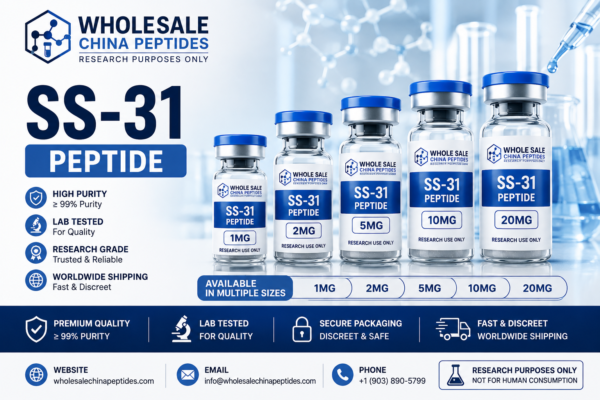
| Choose An Option | 1mg*10vials, 2mg*10vials, 5mg*10vials, 10mg*10vials, 20mg*10vials |
|---|
Be the first to review “SS-31 Peptide”
Related products
Healing & Recovery Peptides

Cognitive & Neurological Research Peptides

Healing & Recovery Peptides
Cognitive & Neurological Research Peptides

Healing & Recovery Peptides

Healing & Recovery Peptides
Growth Hormone Secretagogues
Healing & Recovery Peptides
Reviews
There are no reviews yet.